All my life I’ve lived in cities. I love cities. But perhaps that’s only because I know no different.
The hustle, the bustle, people flowing through streets, vehicles dodging during rush hour–it’s what I’m used to. But is it healthy? Is it good?
For a number of years, mental health professionals have been seeing increases in anxiety and other stress-related illnesses. They propose many reasons for this. However, one solution they’ve offered might be surprising.
According to some such professionals, people simply aren’t getting outside enough. Yes, people may go out to run errands or go to their jobs. But this simply isn’t enough.
When you’re outdoors in a city, you still hear the sirens; you still have to shout to be heard; you’re still anonymous in a crowd of anonymous people.
Many mental health professionals are therefore recommending that people must get out of cities, or at least find large green spaces within them.
Somehow, communing with nature, being surrounded with grass and trees, rocks and birds, flowing water and open skies can be just as healing as paying a therapist $200 an hour so you can talk your problems away.
Now, don’t get me wrong, therapists do great work. So much so that everyone should have at least one good course of therapy during their lifetime (yes, I am a believer!).
However, I don’t think anyone could survive without taking time to enjoy nature, to speak and be spoken to by the natural world of which we’re all a part.
Why?
Here’s part of my answer: Silence. “What’s that?” you might ask. You heard me–Silence.
“What’s so special about silence?”
Nothing . . . but everything . . .
“Huh?”
Let me explain . . .
Contrary to what many believe, silence is not simply the absence of sound. A person might be in a room where everyone can hear a proverbial pin drop. But that doesn’t mean they’re experiencing silence.
Why’s that?
Silence isn’t existing in a soundless environment. Neither is it putting in earplugs or tuning out from all the activity around yourself. Silence is related to these things. But none of these by itself is true silence.
True silence is a quality of presence. It’s a gravity, a pull, a dropping into a certain kind of awareness. It’s a felt sense of relationship, of connection, of gravitas.
(Somehow, normal language can’t capture what silence actually is–again there’s that why question . . .)
Silence founds speech, it undergirds, gives meaning to, and inhabits the words we speak. In fact, it might be possible to measure the power of a person’s words by gauging how much silence is in their speech.
Words that embrace silence often convey more power. Such words are spoken carefully, chosen deliberately, and uttered intentionally.
(Right now our world needs more silence. Too much of everything has become unmoored. Silence is the anchor that keeps us tethered to all of reality’s subtleties.)
In city life it’s too easy to take shelter from reality by surrounding ourselves with noise. In doing so, we become sonic Michelin men, using any distraction to avoid reality on its own terms.
Getting out of the city, immersing ourselves in nature, however, makes reality unavoidable.
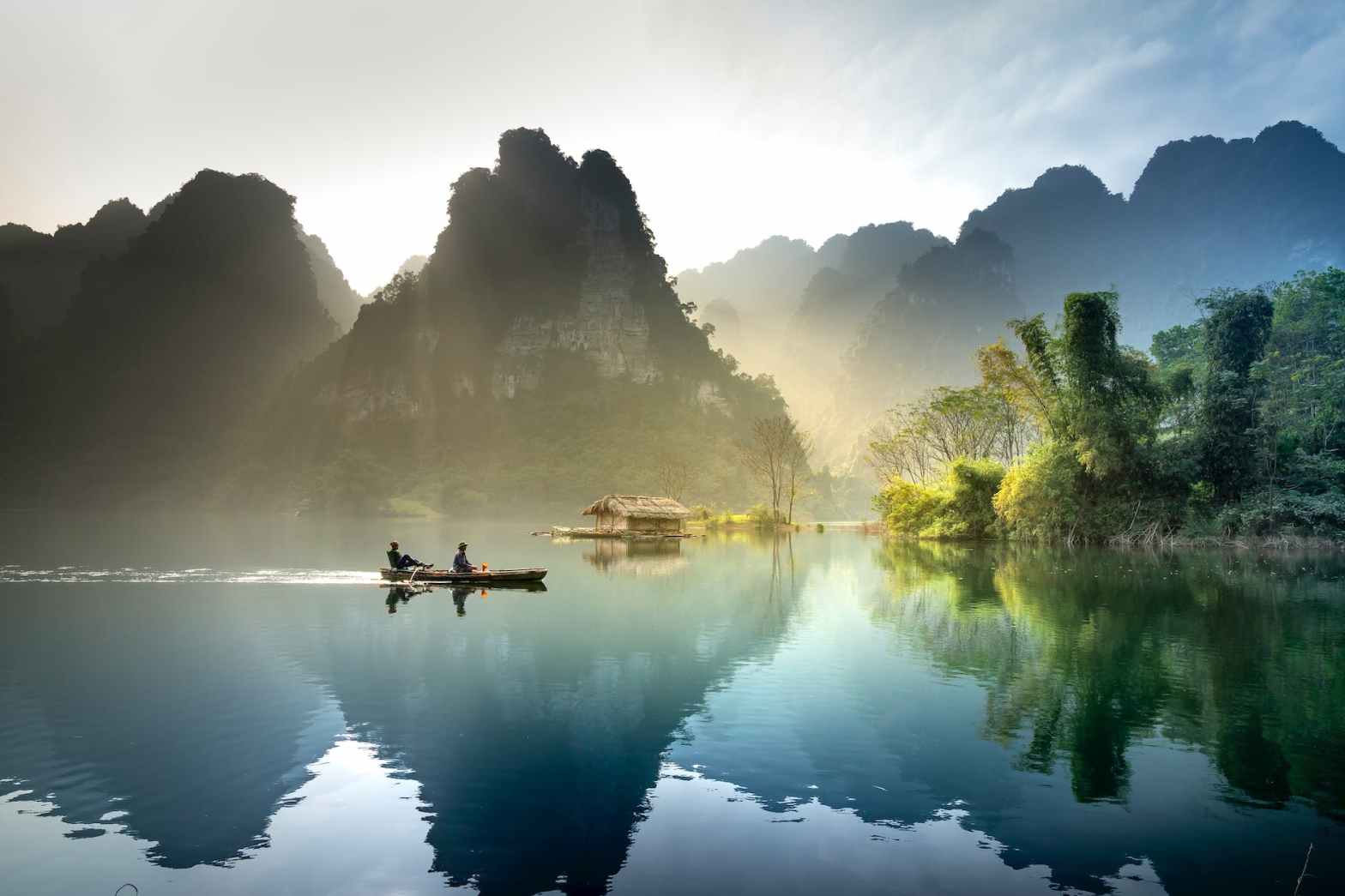
In forests, on lakeshores, on wide open prairies, in mountains, on riverbanks–there lies silence, there lies presence, there lies connection, there lies gravitas.
In silent nature we find ourselves again. Amidst noise and distraction we too easily deify ourselves, making ourselves gods simply by shouting louder than the rest.
In the mountains, on the prairies, in the forests, on the lakeshores, our shouts get lost to the wind. We therefore cannot help but come back to our human selves. In these settings, we need earth’s silence to inhabit our speech. Unless we hear this silence and embrace its fullness, we’ll be lost to ourselves.
We may or may not find our way home again.
Nature may bring us home to ourselves, but it’s only because of its silence.
Do you hear what I’m saying?
Be still.
Be silent.
Be.
Disclaimer: The advice and suggestions offered on this site are not substitutes for consultation with qualified mental or spiritual health professionals. The perspectives offered here are those of the author, not of those professionals with whom readers might have relationships as clients or patients. In crisis situations, readers are encouraged to contact these professionals for appropriate support and treatment if needed.
 Reflective Life
On the heels of a recent, brief immersion in some places of silent beauty, your reflection is timely and bang on!
Thank you.
LikeLiked by 1 person
Thanks so much, Karen! Glad the post resonated!
LikeLike
That’s why camping has been so important to us. Walking in nature and having the silence of remote places.
LikeLiked by 1 person
This totally resonates, Don. There’s nothing like standing in the middle of nowhere and soaking it all in . . .
LikeLike