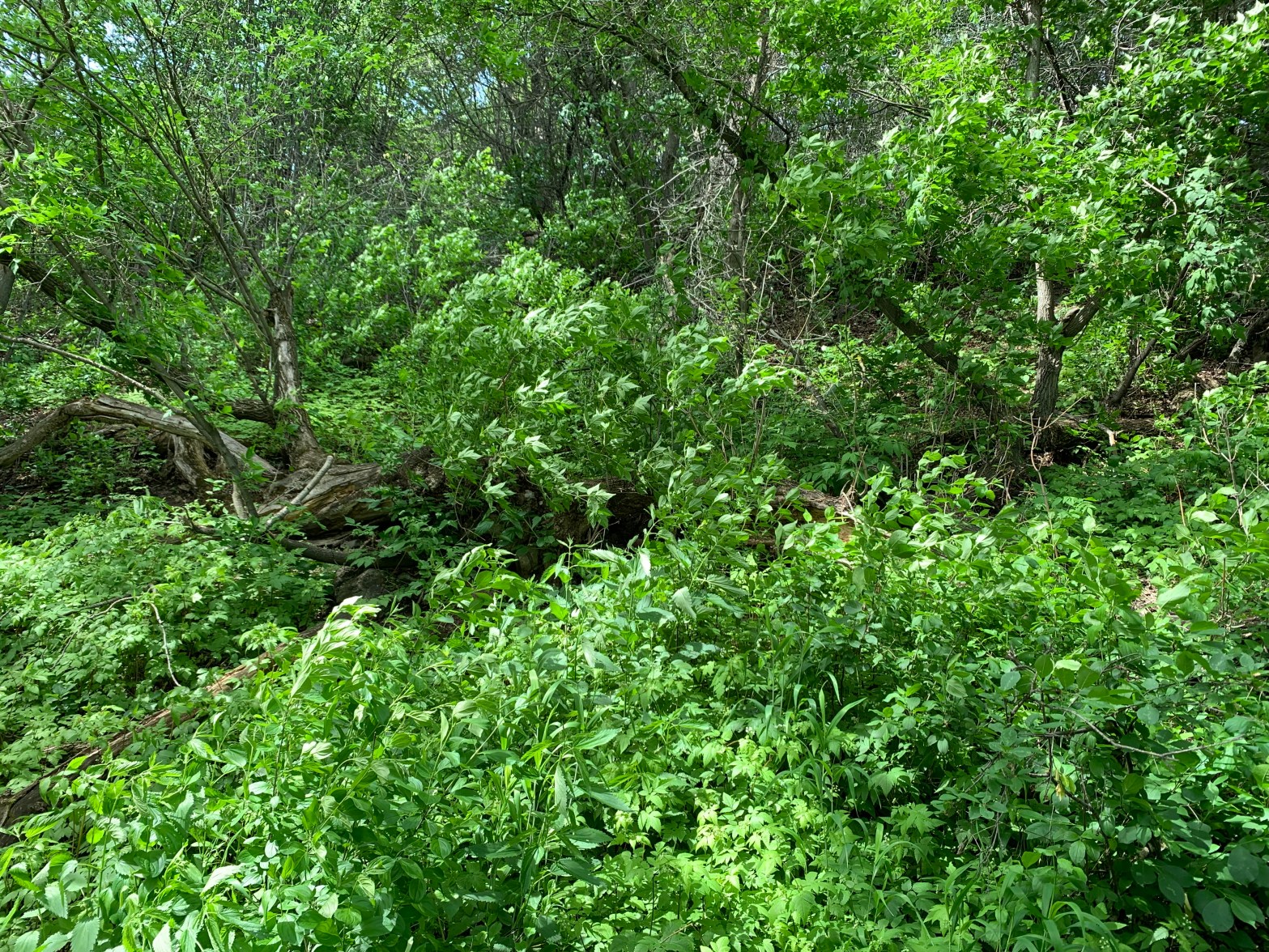
We live in storied landscapes.
I’m not referring to the kinds of stories that life-long city dwellers like me hear when walking through neighbourhoods and studying our locale’s specific histories.
No, I’m referring to the stories etched into craggy rocks protruding from grassy slopes, cascading down to riverbeds.
I’m referring to the tall, windblown tales of flip-flopping tree-leaves early in the summertime.
I’m referring to the ballideering epics spun through competing twitters, chirps, and cheeps of clamouring birdsong.
I’m referring to the pastoral poems pronounced by bison moulting on grassed and sun-soaked prairies.
The earth, the very land we tread upon, has the capacity for speech, if only we have the sense to hear it.
The earth, the very land we tread our feet upon, has the capacity for speech, if only we have the sense to hear it.
Today my work offered an opportunity to get out of the city and reconnect with the land.
We were having a team retreat at an Indigenous heritage centre about ten minutes beyond our city’s limits.
The centre’s design follows many protocols of Indigenous sacred architecture–much of the construction uses naturally occurring materials: wood and stone are beautifully integrated throughout the site’s postmodern building.
The land surrounding the centre includes a gully that boasts one of the last remaining medicine wheels in Canada.
The gully specifically is populated by many plants sacred to the First Peoples from my area; sage and birch are but two used for both medicines and ceremonies.
For a white, European-descended, city-dweller like me, this is unfamiliar territory.
For a white, European-descended, city-dweller like me, this is unfamiliar territory.
Long ago I reached the insight that if I was left alone to survive in the wild, I probably wouldn’t last a night.
Perhaps I could if I had all the supports of contemporary camping–a small gas stove, a waterproof tent, matches, a good knife or hatchet, and food I had bought at my local grocery store.
All these would allow me to bring the city with me. My own comforts from synthetic civilization would permit me to engage the land while remaining within my own frame of reference.
But the land, the vast, complicated, intricate land that I can touch, taste, see, smell, and hear, does not–even remotely–share my frame of reference.
But the land, the vast, complicated, intricate land that I can touch, feel, see, smell, and hear, does not–even remotely–share my frame of reference.
If I were truly to attempt to be shaped by the land, I would have to learn its ways of speaking. I would need to hear the stories it might tell and reconfigure my own language and habits accordingly.
- What plants might nourish and which might kill?
- What signs might foretell the coming of a storm? What would best shelter me from lightning, hail, and rain?
- How to clothe myself to stay warm in the winter and reasonably cool in the summer?
- How to feed my family? What food could I find to keep hunger from us throughout the entire year, not only during specific times and seasons?
These questions reflect the fragility of a land-dependent life.
Yet this is a fragility I rarely reflect upon.
So, as I encountered the land and its stories today, I realized just how insulated I, and many of us are.
As I encountered the land and its stories today, I realized just how insulated I, and many of us are.
For those who live in cities, we scarcely encounter the land and all its manifold stories.
Rather, the stories we tell are framed by concrete, steel, rules and regulations, and all the other trappings of contemporary city life.
For example, city-dweller pastimes, like swimming, are often housed in local recreation centres.
No longer must we swim to catch our evening meal.
Therefore, if an edible creature does appear in a local swimming pool, the facility shuts down, the health authorities are called, and an investigation is launched to discover how such a “foreign” being made its way into a site reserved for humans.
A similar example happened recently when a roaming moose made its way into an empty suburban classroom without first seeking permission.
Yes, this suburb in my city is closer to the “wilds” of the surrounding prairie.
But none of this diminished the obligatory chuckling when all the local news outlets told the story of the moose attending school.
Yes, the chuckling probably reflected how funny we find it when we discover a misplaced moose in our highly urban environments.
But, I also wonder how much of our chuckling is informed by an awareness that a wandering moose is not to be toyed with–“wild” creatures are wild, after all . . .
“Wild” creatures are wild, after all . . .
So, yes, the land and its creatures have become foreign to us. And, perhaps this is why we abuse them so.
As we see them in their perceived foreignness, I wonder whether we also see the land and its creatures as potential threats to our purely human existence.
As humans we love our stories. Our civilizations were, of course, built upon our founding myths.
But what stories might the land tell, if only we had the ears to hear them?
How might these stories shape us, if only we learned to take them seriously?
Then, what stories might we tell the land, once we had learned to hear its stories concerning us?
How might we, and the land, be changed by this new, story-sharing relationship?
How might . . .?
Disclaimer: The advice and suggestions offered on this site are not substitutes for consultation with qualified mental or spiritual health professionals. The perspectives offered here are those of the author, not of those professionals with whom readers might have relationships as clients or patients. In crisis situations, readers are encouraged to contact these professionals for appropriate support and treatment if needed.
 Reflective Life
Thank you Simon. A perfect read as I sit on my back deck watching sparrows and chickadees at the bird feeder, and the leaves of the trees wave in the summer breeze. These days I seem to only want to stay in the present moment and listen. Early summer days invite pondering…
LikeLike
My prayer, in moments when I’m walking alone is, “God, I’m listening”. The prayer behind this prayer is that this will increasingly become a way of being . . . Amen, may it be so, so be it . . .
LikeLike