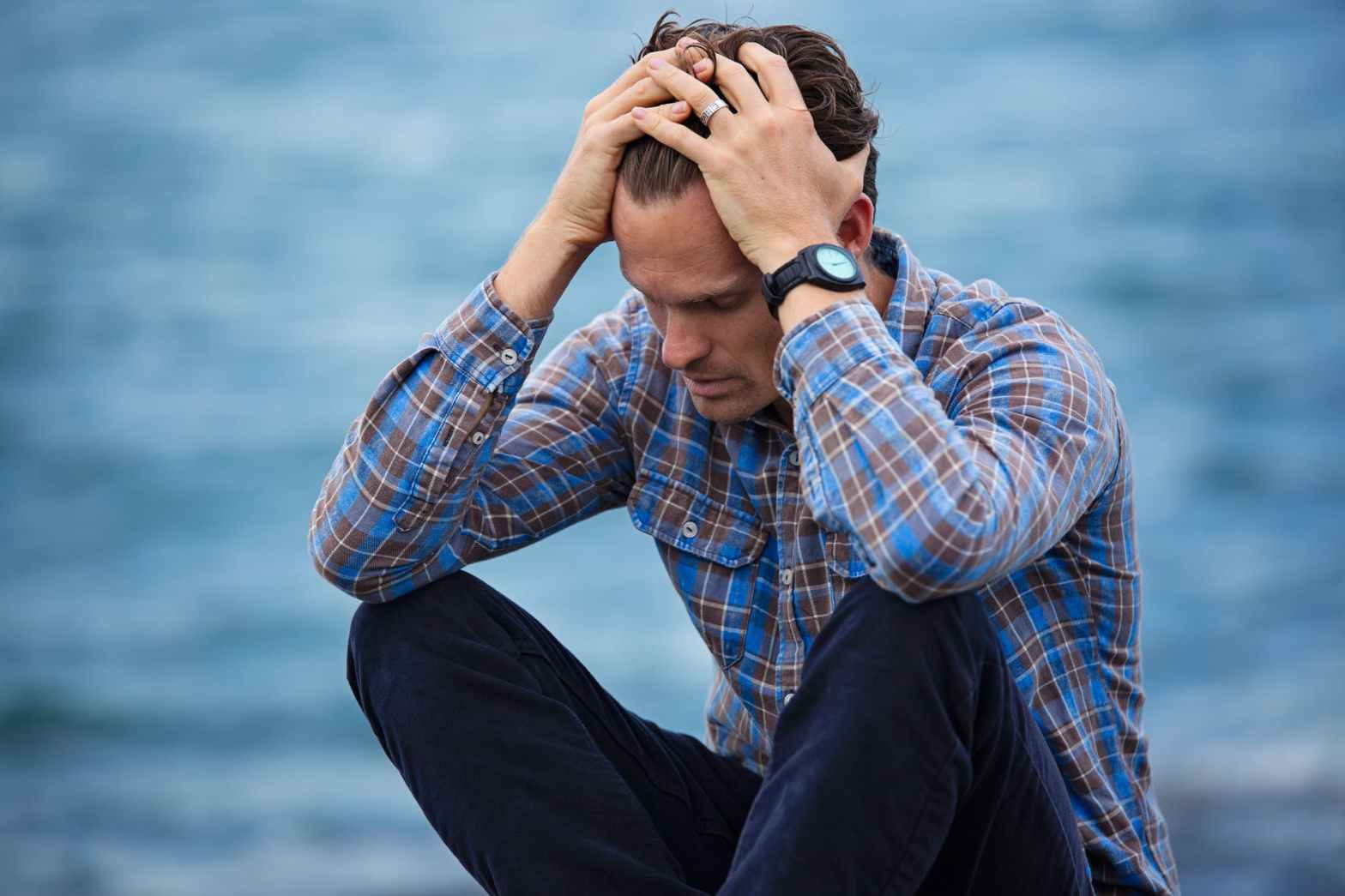
When “The Good” Avoids Us

This post is the second in a series where I discuss the question of “ultimate meaning”.

Previously I wrote that spirituality and religion concern ultimate meaning. I began defining this by stating that spirituality and “the good” are very much connected.

As I wrote, the good is what gives us our reason to get up in the morning; it defines our purpose in life and gives us a sense of direction.

But what happens when it seems we can’t achieve the good things we’ve been pursuing? What happens when the good avoids us?

Often we don’t like thinking about this, because, frankly, it scares us.

“Sooner or later, life will bring us losses, grief, heartache, or hurt.”

But, sooner or later, life will bring us losses, grief, heartache, or hurt.

Depending on the experiences we’ve had before these sad events, we may be able to bounce back quickly. When life has been generally good to us, rebounding from sadness can be easy.

But if life has been troubled, sadness can be a persistent theme. When this is the case, it can seem like we will never see or experience the good. Our world can be defined by hurt, and that hurt can seem inescapable.

This hurt can therefore appear a stark contrast to the good others seem to have in their lives. We can then start telling ourselves stories about how we’ve been hard done by. We can ask: “Am I really a good person if I can’t seem to get what I want in life?”

Whether we know it or not, all these are spiritual questions.

When life is aimed toward the good–both giving and receiving it–it can be devastating when the good seems to avoid us. We can lose our sense of meaning and purpose; we may no longer want to get up in the morning.

While these are normal psychological responses to loss, grief, and hurt, they also have deep spiritual implications.

“If we become dominated by our hurts, it may become impossible for us to experience the good in all its fullness.”

If we allow ourselves to become dominated by our hurts, griefs, or resentments, it may become impossible for us to experience the good in all its fullness. Instead, we might view life through bitterness, anger, resentment, or despair.

The solution is not easy, because it requires finding an inner strength that is often hard to access in times of grief or sadness.

Maintaining spiritual health in times of grief or sadness means living with the tension of our current experience and our ongoing committment to the good in life.

No doubt we will experience anger, frustration, hurt, and disappointment when we encounter grief and loss. But by remaining committed to the good in the midst of these things, we begin to unleash the power of a spiritual approach to life.

In short, this is the power to change the lead of grief and loss into the gold of insight and transformation. But, be prepared, this is a very painful process.

Inevitably it means letting go of our expectations by embracing our limited capacity to change life and reality.

But in this visceral encounter with our limitations, we can also experience liberation. No longer do we require ourselves to force reality into our pre-fabricated understandings of what it ought to be.

Rather, reality will be what it is. And that is deeply, richly, and profoundly good.

Here are nine questions you can reflect upon to gain insight into your approach to pain, suffering, and disappointment:

  1. What is the overall approach I have to life: positive, negative, or a mixture of both?
  2. Where did this approach to life come from? What experiences have I had that taught me what to believe about life?
  3. How has this approach served me when I’ve encountered difficult times or events?
  4. How do I typically respond to difficult times or events?
  5. What have these difficult times or events taught me, if anything?
  6. How have I changed because of difficult times, if at all?
  7. What do I believe about the good, given all I’ve experienced, the good, the bad, and everything else?
  8. What do I want others to say about me because of the ways I’ve dealt with hardship?
  9. What kind of person do I want to be given all I’ve experienced? How can I get there?

When it seems the good is avoiding us, our commitment to the good can enable us to meet hard times with grace.

Grace does not eliminate the frustration, anger, or heartache that hard times bring. But, over time, it can help build flexibility and resilience.

May grace find you, no matter what your life holds for you today.

References

Greenspan, M. (2004). Healing through the dark emotions: The wisdom of grief, fear, and despair. Boulder, CO: Shambhala.

Lasair, S. (2018). Spiritual care as a secular profession: Politics, theory, and practice. Journal for the Study of Spirituality 8 (1): 5-18. https://doi.org/ 10.1080/20440243.2018.1431022

Lasair, S. (2019). A Narrative Approach Spirituality and Spiritual Care in Health Care. Journal of Religion and Health [Online First]. https://rdcu.be/bSZY3

Disclaimer: The advice and suggestions offered on this site are not substitutes for consultation with qualified mental or spiritual health professionals. The perspectives offered here are those of the author, not of those professionals with whom readers might have relationships as clients or patients. In crisis situations, readers are encouraged to contact these professionals for appropriate support and treatment if needed.

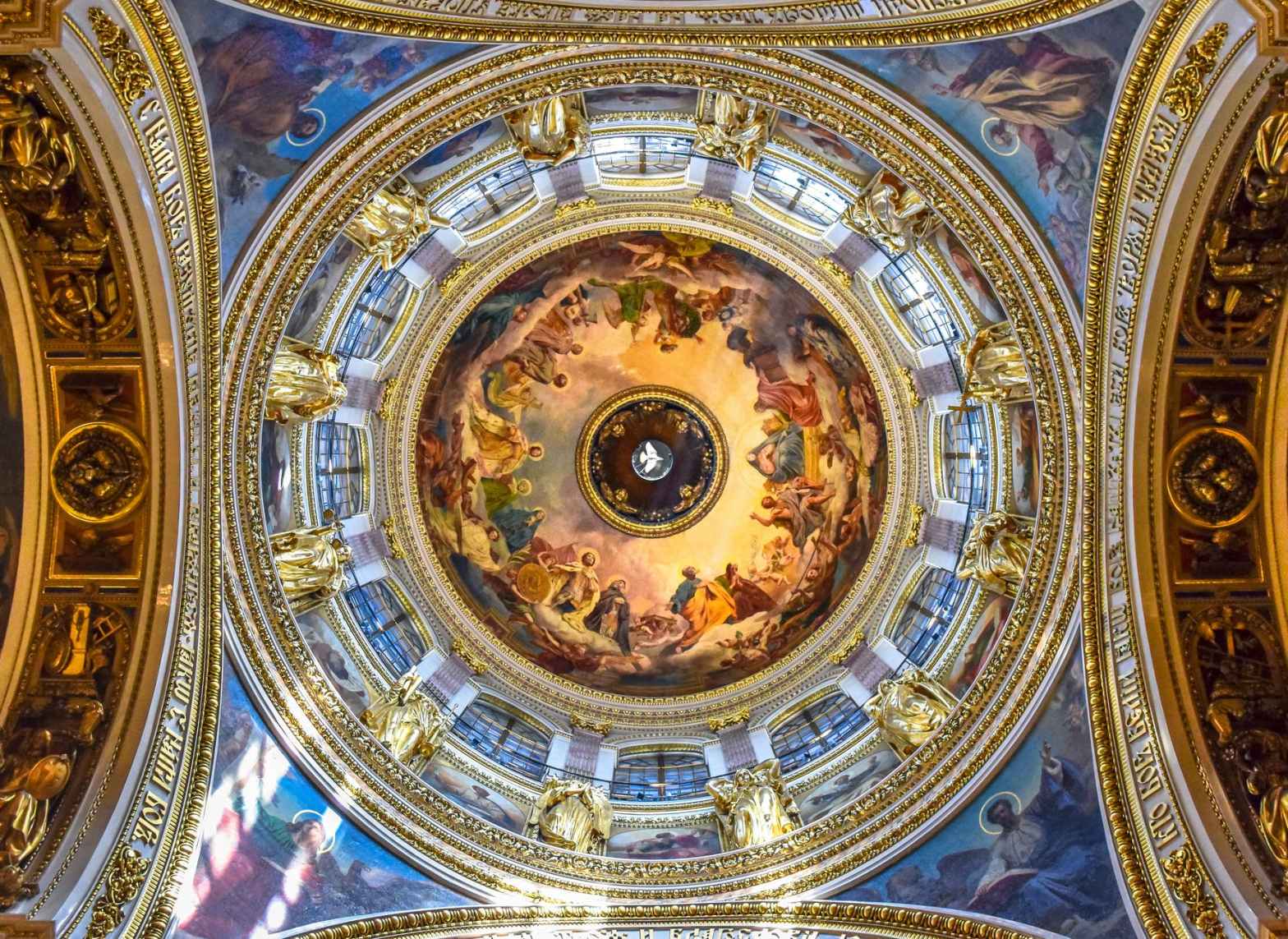
Spirituality and “The Good”

In a previous post I stated spirituality has to do with our sense of ultimate meaning, as does religion. But what is “ultimate meaning”? This post will be the first in a series in which I will respond to this question.

I have been hinting at my response all along in this blog. First I told a story about Truth. Then I wrote not one, but two philosophical posts about Truth. In each, I argued spirituality, religion, and Truth are all closely connected.

Here I’m going to be more concrete: spirituality and Truth concern our notions of “the good”.

All of us have understandings of what “the good” is in life. For some it can mean having a good car, a good home, many possessions, wealth, etc.

For others it can mean having healthy, fulfilling relationships, a good family, a healthy society, etc.

Our specific notions of the good are inconsequetial. What matters is that all of us have some idea of what the good is.

We also all have some ideas of what parts of the good we would like to have or embody.

“Our notions of the good encompass our goals and aims in life.”

Our notions of the good therefore encompass our goals and aims in life. They express our deepest desires, our closely guarded hopes and dreams.

Our notions of the good often come to us from our culture, our language, and our place in society. But at some point, every person decides what specific “goods” they will pursue in life.

When a notion of the good connects with us at the core of our being, it begins to touch on that question of ultimate meaning.

“The good gives us a sense of what our meaning in life is.”

It gives us a sense of what our meaning in life is. It helps us to know who we are, and who we will become. It answers the question of why we get up in the morning. It shows us what we will devote our lives to.

Here are five questions to help you reflect on your own understanding of the good:

  1. What are some things that really matter to you in life? Why do they matter to you?
  2. Where did you learn these things really mattered to you? Who taught you about why they mattered?
  3. How do these important things change how you live? What difference do they make for you on a daily basis?
  4. What are your hopes and dreams regarding these things? How do you want to pursue them?
  5. What kind of person do you want to be because of these things? How do you see yourself getting there?

Getting in touch with our sense of the good is the beginning of getting in touch with our spirituality. Because all people are spiritual, attending to these topics is also a step in building good spiritual health.

Celebrate the good in your life. Express gratitude for how you have seen the good become manifest. Hold on to your hopes for how you want to see further good. Enjoy the blessings you’ve received while still dreaming for tomorrow.

Most of all, don’t give up on the good; the good won’t give up on you. The good won’t give up on you . . .

References

Lasair, S. (2018). Spiritual care as a secular profession: Politics, theory, and practice. Journal for the Study of Spirituality 8 (1): 5-18. https://doi.org/ 10.1080/20440243.2018.1431022

Lasair, S. (2019). A Narrative Approach Spirituality and Spiritual Care in Health Care. Journal of Religion and Health [Online First]. https://rdcu.be/bSZY3

Taylor, C. (1989). Sources of the self: The making of modern identity. Cambridge, MA: Harvard University Press.

Disclaimer: The advice and suggestions offered on this site are not substitutes for consultation with qualified mental or spiritual health professionals. The perspectives offered here are those of the author, not of those professionals with whom readers might have relationships as clients or patients. In crisis situations, readers are encouraged to contact these professionals for appropriate support and treatment if needed.

Who is Spiritual?

When I was thinking about this post, I looked for some images to accompany it.

When I searched “spiritual” I was bombarded by pictures of youngish women in tight clothing bending their bodies into yoga poses that would be impossible for me without years of practice.

Thinking I want this blog to be relatable, part of me cringed at these images. How many of my readers are youngish women who do yoga? I have no idea.

But, as a middle aged man who has struggled with weight problems most of his adult life, I definitely could not relate to these stereotypical images of spirituality.

What was this all about?

Too often the word “spirituality” has been associated with practices or rituals we in the western world consider exotic: yoga, Buddhism, or indigenous ceremonies.

We in the western world (so we understand) do religion. Typically, religion is associated with some form of Christianity. That spirituality stuff is for others–definitely not Christians!

“People in the western world typically use ‘religion’ to describe things resembling protestant Christianity.”

Scholars have, in fact studied the term “religion”. When doing so, they discovered people in the western world typically use “religion” to describe things resembling protestant Christianity.

Roman Catholics or Eastern Orthodox Christians need not apply–to say nothing of people belonging to other faiths!

But as I’ve researched and written about spirituality, I’ve come to understand all people are spiritual, no matter their faith. Even atheists and agnostics have a spirituality!

Though I’ll explore concepts of spirituality in future posts, there is one thing worth remembering: spirituality includes more than you think and less than you know.

Everyone is spiritual, so there is much to be learned here, especially for those who don’t think they need it.

So, come again to discover more!

References

Lasair, S. (2019). A Narrative Approach Spirituality and Spiritual Care in Health Care. Journal of Religion and Health [Online First]. https://rdcu.be/bSZY3

Nongbri, B. (2012). Before religion: The history of a modern concept. New Haven, CT: Yale University Press.

Disclaimer: The advice and suggestions offered on this site are not substitutes for consultation with qualified mental or spiritual health professionals. The perspectives offered here are those of the author, not of those professionals with whom readers might have relationships as clients or patients. In crisis situations, readers are encouraged to contact these professionals for appropriate support and treatment if needed.

Truth isn’t Truth unless it’s Experienced

A number of years ago I discovered The Master and His Emissary. This book, written by British psychiatrist Iain McGilchrist, explores the right and left sides of the human brain.

While this book is very complicated and technical, one thing stood out. At one point McGilchrist wrote something like: “The reality a person perceives is the reality they experience.”

When McGilchrist wrote this, he was discussing how disabling part of a person’s brain affects their perceptions. For example, when the right brain was disabled (meaning a person was using only their left brain), a person’s perceptions were distorted and fragmented.

However, when a person’s left brain was disabled (meaning they were using only their right brain), their perceptions were similar to those of people with normal brains. These right brain perceptions lacked only some specific details perceived by people with normal brains.

McGilchrist therefore concluded: people who emphasize only the left brain or the right brain perceive and experience reality very differently from those who consistently use both sides of their brains. The reality a person perceives is the reality they experience.

“The reality a person perceives is the reality they experience.”

Iain McGilchrist

What does all this mean for spiritual and religious health?

In a previous post I wrote about how Truth can never be fully captured by human thought. I’ve also written about how Truth can be experienced. Given spirituality and religion concern Truth with a capital “T”, perception, spirituality, and religion must be very closely connected–they all concern Truth!

But if perceptions define a person’s reality, is it possible ever to know Truth?

Yes and no.

Several religious traditions have practices and teachings for purifying a person’s perception. Often these include meditation, prayer, fasting, rituals, and numerous other spiritual tools. The goal is to expand a person’s perception so they can have a purer experience of Truth.

However, there is also an acknowledgement that any person’s experience always remains their experience.

It is only in conversation that a person can learn whether others have had experiences similar to their own. In conversation, people can share their experiences of Truth, so they can build a shared understanding of Truth.

Over time, these shared understandings can become a tradition. Ideally, a tradition is distilled wisdom regarding Truth. However, if a tradition’s members are committed only to maintaining its purity, problems can emerge.

“Traditions must be open to experience if they are to remain alive.”

As I previously wrote, traditions must be open to experience to remain alive. Tradition gives tools for interpreting experience. But it cannot say what experiences are True and which are not. Experience is True in a way tradition is not.

Tradition can assist in understanding experience. But, experience always comes before tradition. As a result, tradition must always be open to the Truth experience reveals.

Unfortunately, many people’s encounters with religion show how traditions are often not open to experience. This can result in deep hurt, religious or spiritual harm, if not religious or spiritual death.

I believe this is one reason why millions are leaving organized religion in many western countries.

So, to return to perception, spirituality, religion, and Truth:

If our perceptions are defined solely by what tradition says, or is thought to say, many experiences will be excluded from our understanding of Truth.

However, if our perceptions exclude what specific traditions might say about our experiences, we will potentially miss new or surprising insights.

As a result, Truth must hold our experiences and the meanings we assign them. An experience’s possible meanings must be tested against the experience itself. Similarly, an experience must be assigned some meaning for it to be understood. If either is missing, no one will know what the Truth of an experience is, or might be.

Therefore, Truth isn’t Truth unless it’s experienced. A statement cannot be True unless it accurately expresses our experience. Neither can we share the Truth of our experience unless we can somehow express it.

All this is said knowing that experience and Truth are always bigger than what can be put into language. Truth and experience are always greater than what traditions can say about them. Language and tradition are merely how we bring our experiences and their Truth into community.

Here are six considerations you can use to expand your perceptions of Truth:

  1. Consider from where your perceptions come. How have your family, culture, and community formed how you view life and your experiences?
  2. Consider from where others’ perceptions come. How have their families, cultures, and communities formed how they view life and their experiences?
  3. Consider how your perceptions were formed similarly to, or differently from, others’. How were these formations similar? How were they different?
  4. Consider why some people are your friends or close acquaintances. Why do you choose to share relationships with them, and not others?
  5. Consider why other people have specific friends and acquaintances. Why do they choose to share relationships with some, and not others?
  6. Reflect on what is True about all these considerations. How do these considerations change your perceptions of Truth, if at all? How do your perceptions remain the same, if at all?

Truth isn’t Truth unless it’s experienced. So, if your experiences are limited by your perceptions, what would happen if you expanded your perceptions so you could more fully experience Truth?

This question encapsulates the work needed to build spiritual and religious health. Grow your capacity to experience Truth. See what happens; see how your life and world change as a result.

References

Bibby, R.W. (2017). Resilient gods: Being pro-religious, low religious, or no religious in Canada. Vancouver, BC: UBC Press.

Habermas, J. (2008). Between naturalism and religion. Translated by Ciaran Cronin. Cambridge, UK: Polity Press.

Harman, G. (2018). Object-oriented ontology: A new theory of everything. London, UK: Penguin Random House.

McGilchrist, I. (2009). The master and his emissary: The divided brain and the making of the western world. New Haven, CT: Yale University Press.

Wilber, K. (2017). The religion of tomorrow: A vision for the future of the great traditions–more inclusive, more comprehensive, more complete. Boulder, CO: Shambhala

Disclaimer: The advice and suggestions offered on this site are not substitutes for consultation with qualified mental or spiritual health professionals. The perspectives offered here are those of the author, not of those professionals with whom readers might have relationships as clients or patients. In crisis situations, readers are encouraged to contact these professionals for appropriate support and treatment if needed.

Truth Can’t be Truth if it’s Captured

When I was a spiritual care practitioner (chaplain) in health care, every day I met suffering people. Sometimes their suffering was purely physical. But on many occasions their physical pain was accompanied by religious or spiritual suffering.

According to researchers, religious or spiritual suffering can emerge when a person’s beliefs can’t account for their experiences. There are two questions that give insight into this experience:

  1. How can a loving God allow me (or cause me) to suffer this way?
  2. Why is God punishing me?

As a spiritual care practitioner, I was responsible to gently explore these questions with these people. The goal was, somehow, to ease the pain and suffering these questions caused along with the person’s physical discomfort.

My profession gives me several tools to explore beliefs with all sorts of people. Sometimes beliefs can help people. At other times a person’s beliefs can harm them. I’m not the only one who thinks this.

Researchers who explore spirituality, religion, and health have identified several criteria to tell the difference between helpful and unhelpful beliefs. I agree with this approach. But I also believe the reality goes somewhat deeper.

In a previous post I stated both religion and spirituality concern Truth with a capital “T”. In yet another post I told a story regarding an experience of Truth. I therefore suggest the following: a person’s attitudes toward Truth have direct bearing on their religious and spiritual health, especially in times of crisis.

This will need some unpacking.

In philosophy and religion, questions of Truth are very difficult. Philosophers have constructed elaborate theories to determine how languages express truth. Religious thinkers have similarly spent millennia reflecting on, defining, and refining Divine truth.

“The reality of Truth is actually quite simple.”

While the discussions surrounding these topics are extremely complicated, I believe the reality of Truth is actually quite simple. In short: Truth can’t be Truth if it’s captured.

What do I mean by this?

Reality is so vast, so complex, so infinitely wonderful, that its Truth can never, ever, be fully captured in words, in concepts, in art, math, science, or any other human endeavour. This is especially the case when it comes to religious or spiritual Truth.

Nothing is excluded from Truth. Because of this, it is impossible to know or understand Truth in all its vast reality. Anyone who says otherwise is either arrogant, deluding themself, or both. Religious thinkers can sometimes tend in this direction by stating they alone possesses Truth.

But any person or organization can only ever have partial, if not fragmentary, glimpses of Truth.

This being stated, we can all have a deeply felt appreciation for Truth. This comes when we understand the fullness of Truth is always beyond us.

“Truth is always a lived experience.”

Truth is therefore always a lived experience. It involves understanding the limits of our perspectives. It also involves a deep awareness of living on the edge of mystery. This mystery is Truth, and it can not, and will not, ever be captured.

So, spiritual or religious health lies not in the content of beliefs that might or might not cause us problems. Rather, health lies in the attitudes with which we hold our beliefs.

In my health care experiences, those who were open-ended in their beliefs usually fared better than those who held their beliefs inflexibly.

Does this mean a person must be wishy-washy to do well in life? Absolutely not! But it does mean a living relationship with Truth’s mystery will do a person better than a rigid and inflexible approach to life.

Here are five things you can do to build your appreciation for Truth’s mystery:

  1. Grow your awareness of how small your perspective is. Take time to talk with people or read things you wouldn’t normally engage. Do so without defensiveness or a desire to convince others of your perspective. Rather, do this with a genuine desire to understand others’ perspectives. See what happens; see how your perspectives change as a result.
  2. Grow your appreciation for the person you are. Do this by reflecting on the people you’re not. Open yourself to what other people bring to your relationships. Think also about what you bring to these relationships. Do this honestly so you can celebrate your differences, while also understanding why your relationships work, or don’t, as the case may be.
  3. Grow your appreciation for things you don’t understand. Look at the things around you. Do you understand how to build things? Do you know how to give a good speech? Do you understand how the universe came into being, with all its intricacy? Express your admiration for those who do understand these things. Think of the work they had to put into understanding them. Reflect on the work you’ve put into understanding the things you’ve learned.
  4. Reflect on the things you don’t know or understand about yourself. Have conversations with your friends and family about them, if you feel comfortable. Make a plan for how you might explore them together.
  5. Begin a regular prayer or meditation practice. This, like nothing else, will help you experience Truth’s mystery first-hand.

Cultivating flexibility and openness is crucial to living through the crises life will inevitably bring. Knowing and appreciating Truth’s mystery is central to this work. Ultimately, this perspective might be best remembered by repeating: Truth can’t be Truth if it’s captured. Truth can’t be Truth if it’s captured. Truth can’t be Truth if it’s captured . . .

I wish you well on your journey. Join me again for more insights on journeying deeply.

References

Habermas, J. (2003). Truth and justification. Edited with translations by Barbara Fultner. Cambridge, MA: MIT Press.

Harman, G. (2018). Object-Oriented Ontology: a new theory of everything. London, UK: Penguin Random House.

Pargament, K.I. (2007). Spiritually integrated psychotherapy: Understanding and assessing the sacred. New York, NY: Guilford Press.

Wright, L.M. and Bell, J.M. (2009). Beliefs and illness: A model for healing. Calgary, AB: 4th Floor Press.

Disclaimer: The advice and suggestions offered on this site are not substitutes for consultation with qualified mental or spiritual health professionals. The perspectives offered here are those of the author, not of those professionals with whom readers might have relationships as clients or patients. In crisis situations, readers are encouraged to contact these professionals for appropriate support and treatment if needed.

A Story about Truth

In June 1999 I travelled to Israel to participate in an archaeological dig. While the dig was outside Beth Shean in northern Israel, I would travel south to Jerusalem every weekend. There I would enjoy many of the holy sites and museums. Of particular interest was the Church of the Holy Sepulchre.

According to several Christian traditions, this ancient church marks the locations of Jesus’ crucifixion, burial, and resurrection. Even though recent historians have cast doubt on these claims, millions of Christians still consider this church one of Christianity’s holiest sites. The Holy Sepulchre therefore receives thousands, if not hundreds of thousands, of pilgrims from around the globe every year.

* * *

When I visited this church, I still considered myself a Baptist. Because of this, I found the Sepulchre’s ornate chapels with their gilded icons and large altars beautiful, strange, intimidating, and enticing, all at the same time.

Strangest of all was the yearning this church produced in me. As I watched the many pilgrims prostrate themselves and kiss the church’s sacred objects, at times with tears running down their cheeks, there was something about their piety I desperately wanted. The pilgrims seemed to have something my evangelical protestant upbringing had not, and could not, give me.

I cannot name what that “something” was. But part of me still longs for it–deeply.

One evening, after a day spent exploring the city, I and someone I knew from Canada wound up at the Holy Sepulchre. I was not close to this person. In fact, he and I had previously had some deep disagreements when it came to matters I considered important at the time. However, he was the only person I knew in Jerusalem that weekend, so we had spent the day seeing sights together.

When we arrived at the church, it was early in the evening. Most of the pilgrims were gone for the day. The church was quiet after all the earlier hustle and bustle.

I led my companion down into the Armenian chapel, which was on the lowest level of the church accessible to the public.

While I know little about architecture and engineering, this chapel seemed like it had been carved from rock. Its ceiling had a natural appearance that was not shared with the rest of the church. The rest of the of the church was clearly fashioned from human-made materials.

At the front of the chapel was a large stone altar. Behind the altar was a painting of Jesus. The air was heavy with incense, but the scent was not oppressive. Above the altar hung a simple lamp, the light of which, I was told, represented the presence of the Holy Spirit, the third person of the Holy Trinity in most Christian traditions.

As we descended into the chapel, I was overcome with a sense of heaviness. This heaviness was not melancholy. Rather it seemed to indicate the presence of something I couldn’t describe, a presence that was announced by the vast silence that surrounded us in that place.

As we entered that silence, one of us, I can’t recall who, began a conversation. Now, so many years later, it is impossible to remember what we talked about.

Yet I do recall it was the best conversation I ever had with my companion, or would ever have. He and I had had some sharp arguments prior to this evening. In the year following, he and I would have some even sharper conflicts. Unfortunately, those later conflicts would result in me bearing some deep resentments toward him for some time.

But on that evening, that evening in the Armenian chapel in the Church of the Holy Sepulchre, we had the most honest interaction he and I would ever have. We talked about things that mattered to both of us. And both of us were moved by the depth and honesty of our conversation, to the point we both commented and reflected on it afterward.

When trying to pinpoint what enabled us to share a conversation of such openness and vulnerability, it could never be one thing. Certainly the setting had something to do with it. Also, at that point, I approached my life from a religious perspective somewhat similar to his. In that sense we had something in common.

But when I reflect on that evening, I believe it was the womb-like silence around us that prompted the depth of our interaction. It was the silence that opened something within us, that enabled us to share something of the Truth of ourselves with one another. It was the silence that revealed to me, in conversation with my companion, something of my own depth and inner beauty.

* * *

As I reflect on the several important interactions I’ve had in my life, often they have been accompanied by silence. Sometimes the silence has indicated there was nothing left to say. Yet sometimes the silence has been like the silence I encountered in Jerusalem that evening: deep, resonant, and inviting.

One of my greatest desires as I’ve explored my spirituality, then, has been to befriend this silence. When entering it, it is like coming home. It is a place where I am held, surrounded by love, and gifted with new possibilities. It is a place bursting with life, while also gently beckoning into the warm tenderness of embrace. It is the place where existence begins and ends, and where all life lives, especially when we are paying attention.

Really, it is our attention that matters most. Because, whether we know it or not, all of us, without exception, live just on the cusp of silence.

For Further Reading

Sardello, R. (2008). Silence: The mystery of wholeness. Berkeley, CA: Goldenstone Press. Kindle ebook.

Disclaimer: The advice and suggestions offered on this site are not substitutes for consultation with qualified mental or spiritual health professionals. The perspectives offered here are those of the author, not of those professionals with whom readers might have relationships as clients or patients. In crisis situations, readers are encouraged to contact these professionals for appropriate support and treatment if needed.
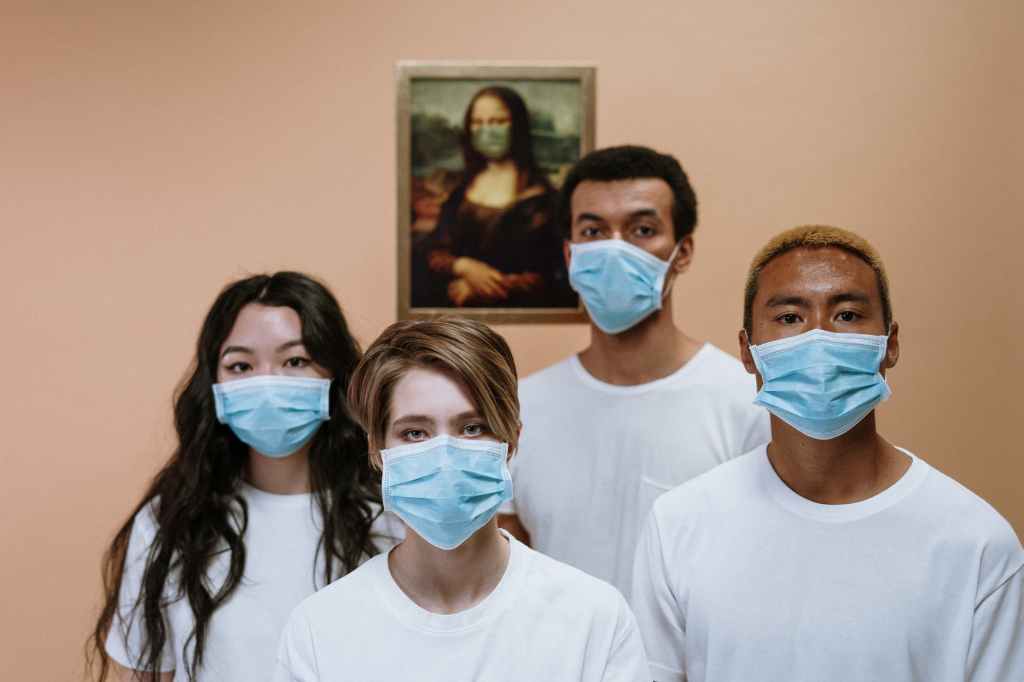
Spirituality and Religion: Similar but Different

During my teen years, my Dad was a pastor at the largest Baptist church in our city. At that time, if anyone asked me my religion, “Christian,” I would answer without hesitation. However, had anyone asked me whether I was “spiritual”, I would not have known what they meant. I might have thought they were asking whether I was interested in “New Age spiritualities”, to which I would have responded, emphatically, “NO!” But I was also aware there was something “spiritual” in my tradition. Yet how to describe that? How to distinguish what is spiritual and what is not? How is the spiritual different from religion, if at all?

As I’ve written and thought about spirituality, I’ve come to see a person’s spirituality is how they respond to questions of ultimate meaning. Sometimes this can be done by participating in specific religious traditions. Sometimes it can be done outside traditional religion.

Religion also responds to questions of ultimate meaning. But in religious settings, the teachings of specific traditions are used–in some cases exclusively–to determine what life’s meaning is.

In best case scenarios, spirituality can bring positive energy and a great deal of insight to religion. Yet when religions ignore spirituality, they can become rigid and oppressive. In some ways, spirituality preserves the human and experiential aspects of religion. When religions ignore spirituality, then, they negate the reason for which they were created–to help humans flourish as an integral part of reality.

So what are spirituality and religion?

“Spirituality is a person’s beliefs, attitudes, and behaviours that bring them into an ever deepening experience of reality.”

I believe spirituality is a person’s beliefs, attitudes, and behaviours that bring them into an ever deepening experience of reality. A person’s religion is the specific set of symbols, teachings, practices, and rituals they use to assist them in their spiritual pursuits. Clearly there is overlap between these concepts. Yet there are also some important differences.

Spirituality refers to the realities of a person’s inner life. Religion, in contrast, refers to things that are parts of a person’s shared social, political, and physical existence. Religion can therefore offer very helpful insights when people are trying to unpack and live the implications of their inner experiences.

Yet religion cannot substitute for inner experience. Neither can inner experience substitute for religion. Rather, the two must be held in tension: symbols, teachings, practices, and rituals must describe, unpack, and enhance a person’s inner experience; yet the symbols, teachings, practices, and rituals also need to be improved, honed, and refined based on what a person’s experience reveals to them.

Where does this leave us?

Spirituality is of no use if it cannot be translated into actions and behaviours that have positive impact on the realties we share with others. Similarly, religion is of no use if it cannot speak meaningfully and deeply to the realities of a person’s inner experience.

Consequently, both spirituality and religion concern Truth with a capital “T”. If neither can engage the Truth of our shared realities, or the Truth of existence, or the Truth of experience, one could well ask, “Why bother?”

I, along with many others, have deep skepticism of spiritualities and religions that have no room for Truth. But how does a person know and experience Truth with a capital “T”? That is a question for another post. Stay tuned; my response might surprise you!

For an experiential exploration of Truth, click here.

References

Lasair, S. (2019). A Narrative Approach Spirituality and Spiritual Care in Health Care. Journal of Religion and Health [Online First]. https://rdcu.be/bSZY3

McBrien, B. (2006). A concept analysis of spirituality. British Journal of Nursing 15 (1): 42-45.

Sinclair, S. & Chochinov, H.M. (2012). Communicating with patients about existential and spiritual issues: SACR-D work. Progress in Palliative Care 20 (2): 72-78. https://doi.org/10.1179/1743291X2Y.0000000015

Swinton, J. (2012). Healthcare spirituality: A question of knowledge. In M. Cobb, C.M. Puchalski, & B. Rumbold (Eds.), Oxford textbook of spirituality in healthcare (pp. 99-104). Oxford, UK: Oxford University Press.

Volf, M. (2015). Flourishing: Why we need religion in a globalized world. New Haven, CT: Yale University Press

Disclaimer: The advice and suggestions offered on this site are not substitutes for consultation with qualified mental or spiritual health professionals. The perspectives offered here are those of the author, not of those professionals with whom readers might have relationships as clients or patients. In crisis situations, readers are encouraged to contact these professionals for appropriate support and treatment if needed.

When Spirituality Counts

Photo by cottonbro on Pexels.com

I was working from home when my province declared its state of emergency. For weeks I had followed the movement of COVID-19 through Asia, then Europe, then other parts of Canada. For some reason I felt sheltered, somehow believing this disease would not affect my part of Canada in the same ways it had affected other parts of the world. Then social distancing happened; then schools started closing; then businesses started closing; then we were told not to leave our homes unless absolutely necessary. In a matter of days, my world changed, almost completely.

Despite the magnitude of these changes, I consider myself fortunate. I am in a good place mentally, emotionally, and spiritually. I have many reasons to get up in the morning, even with the restrictions placed on everybody’s movement and now having to stay home full time.

Do I have a secret? Not really. I try to eat healthy food. I try to exercise regularly. I work hard to communicate honestly and openly with my family and co-workers. Most of all, I take my mental and spiritual health very seriously.

“When life brings unexpected realities into a person’s experience, . . . knowing how to engage the consequent changes can be a challenge”

Having worked the past number of years in spiritual care (chaplaincy work), and also having published several peer-reviewed articles on spirituality and spiritual health, I know spirituality is closely connected to how people find meaning and purpose in life. Spirituality is also deeply connected to a person’s identity–how they have experienced themself in the past informs how they experience themself in the present and how they move into the future.

When life brings unexpected realities into a person’s experience, then, knowing how to engage the consequent changes can be a challenge. This is especially true when all a person’s routines, relationships, work, habits, and hobbies are affected by these new concerns. While there can often be significant mental health challenges that can result from these experiences, drastic changes can also create problems that are, at their core, spiritual. When a person’s routines, and all the other things that give them a sense of self, are no longer available to them, they can experience a loss of identity; their sense of meaning and purpose has been called into serious question.

To address these challenges, it is often appropriate to consult with a qualified mental health professional, like a counsellor, psychologist, social worker, or psychiatrist. It can also be appropriate to talk with a qualified spiritual health professional, like a Certified Spiritual Care Practitioner or Certified Psycho-Spiritual Therapist. Trusted friends, clergy, or spiritual directors can also provide crucial means of support.

But there are also concrete steps each of us can take to keep ourselves well. The things I do to sustain my health are easy to practice and accessible to almost everyone. Eating well, exercising regularly, and maintaining open and honest communication with loved ones and colleagues are all crucial to maintaining psychological and physical wellbeing. But being intentional about spiritual health is something that might be new to many people.

In the next number of posts, then, I’ll be outlining some of the basic concepts connected to spirituality. I will then be better able to write about spiritual health, showing how spiritual health equips us to live through rapidly changing realities with flexibility, resilience, and grace.

When the world changes in a matter of days, we all need to prepare ourselves to engage these changes. When no one knows when normalcy will return, if ever, all the more reason to be intentional in our preparation.

What kind of person might I be during this crisis and after it passes? What will my relationships be like through the crisis and beyond? How might the world change because of the crisis, and how might I participate in the change? How can I prepare myself to flourish in the midst of change? How can I build in others the capacity to similarly flourish, showing myself as a leader in change? How can I embrace the unexpected and the unknown by discovering my inner strength, resilience, and compassion?

These are the questions that will guide the posts that follow. Thanks for joining me on the journey.

References

Lasair, S. (2018). Understanding, assessing, and intervening in the spiritual nature of medical events. Practical Theology 11 (5): 374-386. https://doi.org/10.1080/1756073X.2018.1528749

Lasair, S. (2019). A Narrative Approach Spirituality and Spiritual Care in Health Care. Journal of Religion and Health [Online First]. https://rdcu.be/bSZY3

Disclaimer: The advice and suggestions offered on this site are not substitutes for consultation with qualified mental or spiritual health professionals. The perspectives offered here are those of the author, not of those professionals with whom readers might have relationships as clients or patients. In crisis situations, readers are encouraged to contact these professionals for appropriate support and treatment if needed.

The Purpose of this Blog

Spirituality; spiritual health; change; transformation–all terms that have a certain caché.

Too many times, these words have been thrown about without much understanding. This has often led to confusion, mistakes, and, in some cases, clear harms and abuses.

As a Spiritual Care Practitioner, or Professional Chaplain, I have provided care for people of many different faiths, or of no faith. I have cared for them in the midst of crises. I have also shared with them some of life’s deepest joys. I have seen people experience the isolating darkness of despair. I have also seen people embody the sparkling glimmers of enlivening hope. In all these encounters I have believed that spirituality is the one phenomenon that unites all people–even atheists and agnostics.

To address common misunderstandings of spirituality and spiritual health, then, I have spent the last number of years researching both. This research has resulted in several peer-reviewed publications, as well as a growing reputation as a workshop and retreat facilitator. This work has introduced me to many people of diverse backgrounds, all of whom share my interest in defining and describing spirituality and spiritual health in useful ways, unleashing the transformative potential of both.

To bring my work to a wider audience, I have therefore launched this blog. In it, I will be unpacking the concepts I have developed in my publications, making them more accessible for general readers. To do this, I will tell stories, connecting these stories to the philosophical points I am working to illustrate. I will also spend some time simply describing the concepts. Through the stories and the related concepts, my hope is to draw readers into a deeper engagement with their lived realities, gaining better understandings of spirituality and spiritual health as they do so.

I do this because I believe spirituality and spiritual health are the keys to moving successfully through life. At this time, I am convinced this belief needs to be shared more widely. As I write, we are in the midst of the 2020 COVID-19 pandemic. Worldwide, people are being required to isolate themselves in ways not experienced for generations. Consequently, mental and spiritual health professionals have grave concerns regarding how many will move through this crisis. Many may be spared viral infection due to the measures taken to curb the spread of this disease. Yet the consequences of this disease for the mental and spiritual health of millions have barely begun to be understood. Part of my hope for this blog, then, is that it will contribute to equipping people to move through this crisis, providing reasons for hope, as well as general tools for positive change and transformation.

Please read this blog, then, share it widely, and comment generously and graciously. I look forward to sharing these ideas with you; I also hope you will enjoy reading and responding to them. Let the journey begin!