Here it is, as simply as I can put it: a healthy spirituality is about sharing good, full, rich, and deep relationships with all that is.
All?
Yes, all!
Really?
Absolutely! The seen, the unseen, ourselves, others, the natural world, the metaphysical world, the cosmos, the ultimate–All . . . All.
How is that possible?
The infinite resides within us so all we need to do is find a way for more of it to come through us into the spaces we share with others.
Seems like a lot of mumbo jumbo to me
Maybe, but not if we observe how we shore ourselves up against really encountering other people. Have you ever walked by a homeless person on the street and refused to make eye contact with them?
Yes, of course. Who doesn’t?
Why do you do that?
I don’t want them to ask me for money or if they’re high on something I don’t want to provoke them into behaving erratically or violently toward me.
So it’s fear that prevents you from making eye contact with them?
If I’m fully honest with myself, yes.
That honesty is helpful because what it reveals is that at a semi-conscious level, you are choosing to create a barrier between yourself and another human being. In many cases your fears may be justified, but by never putting it to the test you may also never know how best to engage people who are different from you, yes, but who may also teach you something about the nature of being human.
So you’re saying that if I want a healthy spirituality I need to learn to talk with homeless people?
Maybe. I think the main point is both more abstract and more concrete at the same time. By choosing to be governed by your fear you are missing an opportunity to consciously engage an expression of the universe that could potentially teach you a lot.
Go on . . .
What I’m saying is that often it’s us ourselves that place the limits on our own spiritual health. We cannot relate to All if we cling to the barriers that we build between ourselves and expressions of the All that we find distasteful or disturbing for whatever reasons. If we want to become more spiritually healthy, then, we need to unearth these barriers within ourselves and discover what they’re really about so we can ease and heal them.
That’s a pretty tall order.
Yes, but look where the creation of such barriers has gotten us. Disagreement, conflict, violence, war, pain, suffering, and death. The world is full of these things right now, and most of them have been artificially manufactured because too many of us cannot see beyond our own senses of what’s important to us and us only.
So according to you, the world’s in it’s current state because there’s widespread ill spiritual health?
Yes. Too many lack the capacity to connect with others–even their own family members in some cases–in ways other than what will bring them immediate personal benefit, regardless of the consequences. The result is the world is tearing itself apart, and there seems to be no end in sight.
So what can we do?
Challenge yourself to become aware of whatever it is within yourself that’s preventing you from sharing a full, rich, and meaningful relationship with someone who is very different from you. Then, seek that person out and take a genuine interest in them. Invite them to tell you about their life. You may not become best friends, or even have another conversation with them, but you will have learned something about another person’s life that you wouldn’t have known before.
It’s as simple as that?
It’s as simple as that. Build connection wherever and however you can. Pretty soon you’ll have a fuller, richer, and deeper appreciation of all that humans can encounter in life. Allow that appreciation to work in you, and then see what happens. The results might surprise you.
* * *
Spirituality doesn’t help us escape the world. Rather a healthy spirituality more fully embeds us within the world. Take care, then, to consider how you desire to use your spiritual beliefs and practices. Where will they lead you? Are they inviting you to connect or disconnect? How are they inviting you to contribute to the healing of the world?
Disclaimer: The advice and suggestions offered on this site are not substitutes for consultation with qualified mental or spiritual health professionals. The perspectives offered here are those of the author, not of those professionals with whom readers might have relationships as clients or patients. In crisis situations, readers are encouraged to contact these professionals for appropriate support and treatment if needed.
Over the summer I published a couple posts that articulated some of the paradoxes I see as central to the spiritual life. Why paradox? Is not paradox a logical contradiction? Can those who claim to be rational really embrace realities that are seemingly incompatible?
These are the types of questions philosophers can easily get carried away with. While I enjoy philosophy and even dabble with it more than I like to admit, paradox cannot be understood when restricted to formal logic or various rationalisms.
For those who seek to live life spiritually, paradox is a way of life. Let me put it this way:
Many of us know that to survive we need to embrace life’s practicalities–we need food to eat, water to drink, shelter and clothing to keep us warm–I could go on. But at the same time many of us are also aware there is much more to life than simply eating, drinking, working, and surviving.
This yearning, this sometimes very acute ache, can keep us searching, looking for whatever it is we feel will take us beyond life’s mundane realities and draw us into a greater sense of meaning, purpose, and fulfillment.
(I’m reminded of the first song from the Disney movie Tangled when Rapunzel, the main character sings over and over again, “when will my life begin?”)
Such yearning, such searching, can take us many different directions. It can take us through numerous jobs, successive relationships, through addictions and fantasies, but whether it will lead us precisely where we need to go remains an open question.
Whether yearning or searching will lead us precisely where we need to go remains and open question.
The challenge, though, is that the yearning and the ache can be so pronounced that it can drive us to all sorts of extremes.
But in the end, if we are driven only by the yearning or the ache, unfulfillment will be our constant companion. For us to feel ourselves, the ache and the yearning need to remain with us–we simply don’t know how to be happy or connected where we are, embracing the abundant goodness that surrounds us at any given moment.
The irony is that until we embrace the goodness in our everyday existence, we will never be able to find the transcendent in any meaningful way; our permanent connection to greater meaning or purpose will always remain elusive.
Even in a state of alienation, we still have a relationship with greater meaning, purpose, and fulfillment.
But here’s a first paradox: even in a state of alienation, we still have a relationship with greater meaning, purpose, and fulfillment. It’s just that for whatever reason we are keeping meaning, purpose, and fulfillment at bay.
Whether it be prior trauma, fear of connection, a sense of being caught or confined, whatever it is, we are choosing to remain in states or circumstances that prevent us from maximizing our contributions to life, whatever those contributions might be.
Don’t get me wrong, I regularly encounter people who are trapped and who find it next to impossible to move toward greater flourishing. But it makes me wonder: with the right kinds of help and with the right kinds of supportive communities, could it be that many more of us could enjoy greater meaning, purpose, and fulfillment in life?
The lives of individuals are dependent on the lives of collectivities and the lives of collectivities depend on the lives of individuals
So here, maybe, is a second paradox: The lives of individuals are dependent on the lives of collectivities and the lives of collectivities depend on the lives of individuals.
It’s so easy for us to believe that we live our lives in isolation. But if the age of the internet has taught us anything, it’s that we’re connected to one another in ways we can barely name.
The question, though, is, how can we consciously engage the infinite connections we share with others for the purpose of giving and receiving goodness, both as individuals and as collectivities?
This, I believe, is the question of our age.
For too many of us, it’s easier to hunker down, to take shelter from all the stuff that can quickly overwhelm or produce anxiety.
(It’s true that sometimes we do need to take shelter–believe me, as a life-long introvert, I know!)
To heal ourselves we must first be concerned with the healing of the world . . . but . . . to heal the world we must first be concerned with healing ourselves.
But here’s the paradox that seems to be the key to both our individual and collective futures: to heal ourselves we must first be concerned with the healing of the world . . . but . . . to heal the world we must first be concerned with healing ourselves.
My meaning, purpose, and fulfillment depend–intimately–on the health of the whole, but to improve the health of the whole, I need to be concerned with improving my own health, mentally, physically, spiritually, morally, socially, culturally, interpersonally.
It’s this last paradox that can reveal a sense of meaning, purpose, and fulfillment for us all.
I wonder how many might join us on the journey . . .
Disclaimer: The advice and suggestions offered on this site are not substitutes for consultation with qualified mental or spiritual health professionals. The perspectives offered here are those of the author, not of those professionals with whom readers might have relationships as clients or patients. In crisis situations, readers are encouraged to contact these professionals for appropriate support and treatment if needed.
As above, so below–such is a timeless truth of multiple spiritual traditions. Or, put differently, humanity is a microcosm–literally a small cosmos–of the universe. In keeping with my previous post, I offer the following aphorisms for reflection.
All reality is relational; no person, place, or thing can be encountered in isolation.
Because we are made of the cosmos, cosmic laws have bearing on every aspect of our existence.
Because consciousness can choose to isolate or to live in relationship, individuals can choose to embrace and engage the laws of the cosmos, or we can choose to ignore them.
Conscious participation with cosmic laws is the essence of wisdom; willful isolation is the essence of folly.
To move with the cosmos is to consciously participate in individual and collective evolution; refusal to evolve propels individuals and collectivities toward extinction.
For individuals to participate in conscious evolution, they, like the cosmos, must expand into new and unexplored territory.
While this territory may be unexplored, a foundation in law can guide conscious explorers into the unknown.
While the unknown may be feared at first, an individual’s understanding of law must expand so they can wisely explore territory that requires growth in both consciousness and experience.
Law underpins all of reality; expanding consciousness works to include more of it in unfamiliar places.
As below, so above. As consciousness expands along with the cosmos, wisdom and understanding correspondingly grow to embrace more of law, the foundation of all reality.
Disclaimer: The advice and suggestions offered on this site are not substitutes for consultation with qualified mental or spiritual health professionals. The perspectives offered here are those of the author, not of those professionals with whom readers might have relationships as clients or patients. In crisis situations, readers are encouraged to contact these professionals for appropriate support and treatment if needed.
There are a lot of things that can be said about spirituality and how it might or might not guide us through life. But here are some seeming paradoxes that might serve as guides into a deeper and fuller encounter with transcendent realities. I offer them here to be pondered . . .
You will never again be the people you previously were, neither can you fully anticipate the people you will become, yet the person you fundamentally are will always stay the same.
The person you are is a gateway to the infinite, but to get there you must daily confront your limitations.
Bringing the infinite to bear on your limitations is a tried and true way of becoming more yourself.
Encountering the infinite will never eliminate your limitations, but it will reveal how your limitations can be gifts received by yourself and others.
In relation to the infinite, limitation itself is a gift because it allows the infinite to be encountered in finite forms.
All finite entities convey the infinite, if only we have the awareness to perceive it.
Reality is often a matter of perception, because the realities we perceive are the realities we experience.
To experience reality’s truth we must hone and refine our capacities for perception.
Truth always transcends perception–this is why the work of change and transformation will never be complete in this life.
Because of all this, you will never again be the people you previously were, neither can you fully anticipate the people you will become, yet the person you fundamentally are will always stay the same.
Disclaimer: The advice and suggestions offered on this site are not substitutes for consultation with qualified mental or spiritual health professionals. The perspectives offered here are those of the author, not of those professionals with whom readers might have relationships as clients or patients. In crisis situations, readers are encouraged to contact these professionals for appropriate support and treatment if needed.
Do you ever get that uncanny feeling that you’re living in multiple universes at the same time?
I do.
It’s hard to explain, really. Sometimes it can come as déjà vu. Other times it can come as the feeling that something much deeper is going on in the midst of daily events.
It’s a hunch, an intuition that somehow you’re connected to something you can’t quite name.
It’s like reality isn’t quite real anymore. Or it’s like reality is so real that somehow everything seems different from what you normally experience.
I suspect that many experienced these feelings at the height of the COVID-19 pandemic.
In the early days of the lockdown, I remember walking through my neighbourhood feeling that the world had become a place I didn’t recognize anymore.
In the early days of the lockdown, I remember walking through my neighbourhood feeling that the world had become a place I didn’t recognize anymore.
The streets were free of vehicles; few were outdoors; all the shops in the shopping districts were shut.
It was like all the post-apocalyptic movies I’d watched had become our collective reality.
Perhaps it’s not surprising, then, that since the pandemic there have been a number of blockbuster movies that each explore the multiverse.
Yes, the multiverse had been a trendy topic in quantum physics for some time before the pandemic.
But, for whatever reason, it seems the multiverse is capturing the popular imagination in ways that go far beyond what many had been aware of previously.
This could be because many of us, including me, experienced these strange feelings of unreality during the pandemic.
It could also be because many of us have begun to yearn for realities that are drastically different from those we experience every day.
The multiverse might be becoming increasingly popular because many of us have begun to yearn for realities that are drastically different from those we experience every day.
In a world that’s becoming increasingly characterized by political polarization, economic disparities, and many kinds of injustice, many, if not most of us, are no longer satisfied with the status quo.
It’s likely many of us are experiencing deep desires to escape.
In a not-so-strange way, multiverse movies can provide us with some temporary escape.
But when the movies stop, and we come back to our daily realities, our experience is much the same as before. Escape in any lasting sense rarely, if ever, comes.
I believe this signals at least two things:
For some, the possibility of slipping into alternate realities could be a dream come true.
To find a different universe where you could live a different life, have different relationships, different jobs, different homes, and so on, could be very attractive.
But such a possibility assumes we would experience these different universes as better than our own, that somehow our lives would be easier.
But as the multiverse movies teach us, this is not always the case.
For some, if not many, slipping into a parallel universe could easily be the substance of nightmares.
For some, if not many, slipping into a parallel universe could easily be the substance of nightmares.
If there’s one constant in human existence, it’s that few of us live lives free of pain and struggle.
Yes, we all experience these things in degrees–some seem to have easy lives; others can’t seem to get on top of whatever’s hurting them.
To think, then, that escaping to another universe would somehow make life more liveable, erase all pain and suffering, just doesn’t seem consistent with what most of us experience.
In truth, if life was only easy, if nothing but pleasure characterized everything we do, the likelihood is we’d all feel quite bored.
It seems we as humans need a challenge, we need to strive for something, we need something to aim toward.
Without the need to overcome obstacles, we start to drift and languish. Why bother to achieve anything at all, you might ask?
But here’s where the multiverse comes in . . .
. . . the reality you perceive is the reality you experience.
Neuroscientists are now starting to understand that the reality you perceive is the reality you experience.
Similarly, many philosophers and religious thinkers have understood for millennia that the worlds of concepts, the imagination, and beauty are just as real as the physical universes of which we’re all parts.
So, what does this mean?
If you’re able to imagine a new concept, or engage in creative work, or use words to transform your familial, social, political, and physical worlds, you’re already living in the multiverse!
When anyone engages reality at all its different levels, holding them all together in the process, that person knows there are different universes of which most people are simply unaware.
Why are most people simply unaware?
It’s because many people don’t bring universes they individually inhabit into the collective shared awareness.
Yes, it’s true most of us do this in small ways everyday, like when we share what we’re feeling with someone close to us, or like when we present new ideas for how to do something with co-workers.
Each of these are examples of different universes encountering one another–the universe(s) I inhabit come into contact with those in which other people dwell.
But to transform the collective shared awareness, we need much deeper contact with the multiverse. We need to make our home somewhere other than only the realities we share with others.
We need to make our home somewhere other than only the realities we share with others.
Sounds easy, right? In some ways it is; in other ways it isn’t.
To make our home in spaces we don’t share with others can initially be quite isolating.
In these spaces we learn the uniqueness of our perspectives, the distinctive features of our particular world.
But here’s the tricky part: if our specific world is so foreign from the universes others inhabit, then conversation can become difficult.
Just ask anyone who has travelled anywhere where they don’t speak the local language . . .
In the absence of conversation, however, a person can learn to observe, to see and see through.
See and see through?
Yes, in observation we begin to see and see through what other people claim to be real. We increasingly see and see through the illusions that occupy most people’s daily existence.
We see and see through these things because we catch bigger and bigger glimpses of the true realities that inform all of our shared existence.
Somehow, when we no longer communicate with other people, something deeper, wider, and more expansive begins to communicate with us.
And that is our entry into multiversal realities!
. . . no matter what you call it, it’s a space beyond our daily realities.
Call it the world of the imagination, the world of concepts or forms, or the world of the true, the good, and the beautiful–no matter what you call it, it’s a space beyond our daily realities.
Its name is not the point.
The point is that if we take the time to cultivate inner awareness, an inner sense of presence, we can move into this space in an instant.
All it takes is a conscious decision to attend to the stillness within, and suddenly the world around us becomes vibrant with colour, shimmering with the glamour of the Presence that inhabits all things.
Yes, this may seem overly idealistic, close to impossible (it is true that building awareness of this Presence takes work).
But once that awareness is there, the Presence can be detected at nearly any time, in nearly any place.
Silence and isolation are necessary to start building awareness of this presence.
I stated earlier that times of solitude and isolation are necessary to start building such awareness of this Presence.
Solitude and isolation are necessary because silence is this Presence’s main entry point.
Silence bridges our inner awareness and the reality of this Presence that permeates all.
Silence therefore bridges between the multiversal Presence and all the physical spaces we share with others.
If somehow we can bring this Presence into us with silence, then those we interact with take notice; they see and hear something different in us, something they can’t quite name.
This is how we traverse the multiverse.
The multiverse is real . . .
The lesson? The multiverse is real, but not in the sense that many popular movies or even science talk about it.
In its reality, we ourselves can traverse this multiverse, simply by embodying a different kind of reality, a connection to the Presence that permeates all that is.
In this multiverse, escape is no longer necessary because we experience the silent Presence as already our home.
Furthermore, by constantly connecting our presence to the Presence, that’s how the worlds we share get transformed by the multiverse.
That’s when collective desires to escape disappear, because that’s when multiversal dreams or nightmares simply dissolve by encountering the multiversal Presence’s silent yet truly transforming reality in us.
We can live in the multiverse because we are capable of traversing it.
But in the multiverse we discover the Presence.
What the Presence reveals in us uncovers the multiverse’s ultimate truth and importance.
Disclaimer: The advice and suggestions offered on this site are not substitutes for consultation with qualified mental or spiritual health professionals. The perspectives offered here are those of the author, not of those professionals with whom readers might have relationships as clients or patients. In crisis situations, readers are encouraged to contact these professionals for appropriate support and treatment if needed.
Home isn’t a structure. It isn’t relationships. It isn’t even family.
No, home speaks to yearnings, desires, fulfillments, feelings of safety and security.
When these are absent, we might call a place home–but is it . . . really?
______________________
Often in the spiritual life, people talk about being at home with themselves. A strange metaphor, in many ways.
But consider the opposite, and we catch a glimpse of what it means.
Who hasn’t lived through embarrassment? Who hasn’t felt shame? Who hasn’t agonized in moments when conversation or relationships just seem impossible?
It takes supreme comfort to come through such moments and emerge relatively unscathed.
Who possesses such quality!?
Can a person simply be at home, no matter where they are, no matter who they meet?
Can a person give others a sense of home, no matter who they are, no matter where they meet?
(Many of us have met at least one person who sets us so at ease that somehow we tell them things we’ve never told anyone else before)
It’s a quality, something about how such people engage life, something about how they bring life, something about . . .
. . . and there it goes again . . .
. . . the glimmer, the glimpse, it all comes in fragments, in moments, in something beyond . . .
Beyond . . .?
Yes, beyond. Beyond the humdrum day to day monotony of dishes and children and laundry and errands and work and play and learning and earning, giving and forgiving.
It’s beyond all those things because it’s in all those things.
Home lives in and through us and grows around us. It’s for us and against us, nurturing and challenging, fertilizing and pruning us.
Home pushes and pulls, it laughs, it cries, it smooths, it storms, it brings, it removes.
Home stays with all of this, because it is all of this . . . and more.
At some point, we all need to come home.
Who, where, and what is yours?
Disclaimer: The advice and suggestions offered on this site are not substitutes for consultation with qualified mental or spiritual health professionals. The perspectives offered here are those of the author, not of those professionals with whom readers might have relationships as clients or patients. In crisis situations, readers are encouraged to contact these professionals for appropriate support and treatment if needed.
It’s not every day I talk to such people. The city where I live has only a small Buddhist community, and I’m not connected with it.
A couple weeks ago I was attending meetings for my professional organization–the Canadian Association for Spiritual Care/Association canadienne de soins spirituels (CASC/ACSS).
CASC/ACSS is a national multi-faith organization that trains and certifies Spiritual Care Practitioners (formerly Chaplains) who work in all kinds of organizations–hospitals, prisons, the military, and some corporate environments.
But this isn’t really what I want to talk about.
At the CASC/ACSS meetings, I met a colleague who is an ordained Buddhist monk.
Over lunch we were talking, and he told me about a Tibetan meditation where you bring to mind the faces of everyone in your life. As you do this, you feel your way into the reality that either in this life or a past life, either literally or figuratively, each of those people has been your mother.
What? How could any of these people have been my mother? I already have a mother, and none of these is she!
My Buddhist colleague was careful to say, you don’t have to believe what you’re doing for it to be effective.
All the people in my life do not have to be my mother literally. But what if I began to build my relationships with them as if they were my mother?
Now, don’t get me wrong. I know many people have difficult relationships with their mothers.
But, we cannot ignore the fact that all our mothers gave us life. They brought us into the world. Ideally, all mothers nurture and care for their children.
Ideally, all children love and care for their mothers. This is one way we return the nurture and care our mothers gave us early in and throughout our lives.
Again, I know this kind of relationship is elusive for many.
But, if I internalize the awareness that anyone or anything could be my mother, how would that change my relationship with that person or thing?
Now, I’m not a Buddhist, even though that tradition has had a significant influence on my spirituality. So, when my colleague told me about this practice, it was completely new to me.
However, it helped me see that if I were to construct my relationship with everything else as if I depended on it for my very existence, then I would go through life very differently.
Here’s another way of looking at this:
I would not be alive were it not for my mother and father.
They would not be alive were it not for their parents, grandparents, and great-grandparents.
All my ancestors were shaped by their natural and/or urban environments. All my ancestors were shaped by their social, political, and economic situations.
All human beings are shaped by weather patterns, by the changing of the seasons, by solar flares, by galactic and intergalactic patterns of gravitation–and this is regardless of whether these realities are easy to relate to or not.
So, if I internalize the reality that I am dependent on all these things, from my ancestors to my neighbours, from the conditions of the soil to the ever-changing patterns of weather, and so on, then all of a sudden I cannot survive if I don’t work in partnership with each of these.
In the western world, however, we’ve believed for too long that the natural world is there to be exploited.
But, if we take my Buddhist colleague’s practice seriously, then the western perspective invites us to exploit and take advantage of our very own mother!
In doing so we’ve made her impoverished and destitute while we continue to harvest her bounteous fecundity to be used for our own advantage.
I don’t know about you, but sitting with that reality makes me feel defiled and dirty.
But sitting with these feelings also invites me to consider what a different kind of relationship with all my mothers might look and feel like.
The reality is, relationships must always be negotiated. They must emerge and evolve according to the interpersonal dynamics between the different individuals involved.
So what if my life became more oriented toward drawing out the best and the beautiful in everyone and everything I encountered?
What if I could see how every aspect of my life depends on the health and wellbeing of every other person and thing on earth?
What if I could work to build my own sense of health and wellbeing so I could help support the health and wellbeing of others?
What if through my own work I could become like a loving parent to others, nurturing and facilitating their growth while nurturing and facilitating my own growth at the same time?
Despite what we’re often taught in the West, relationships are inevitable.
We can either embrace or reject that reality.
If we choose to embrace that reality, that’s great; if we choose to reject it, who knows what might happen (perhaps we’re already seeing the consequences of such a decision in our collective experience . . .)?
Regardless, I wonder what might happen if we learned to ask all reality a question that titles a book I’ve often read to my children:
“Are you my mother?
If we learn to perceive right, perhaps we might feel all reality whisper back:
“Yes!”
Disclaimer: The advice and suggestions offered on this site are not substitutes for consultation with qualified mental or spiritual health professionals. The perspectives offered here are those of the author, not of those professionals with whom readers might have relationships as clients or patients. In crisis situations, readers are encouraged to contact these professionals for appropriate support and treatment if needed.
All my life I’ve lived in cities. I love cities. But perhaps that’s only because I know no different.
The hustle, the bustle, people flowing through streets, vehicles dodging during rush hour–it’s what I’m used to. But is it healthy? Is it good?
For a number of years, mental health professionals have been seeing increases in anxiety and other stress-related illnesses. They propose many reasons for this. However, one solution they’ve offered might be surprising.
According to some such professionals, people simply aren’t getting outside enough. Yes, people may go out to run errands or go to their jobs. But this simply isn’t enough.
When you’re outdoors in a city, you still hear the sirens; you still have to shout to be heard; you’re still anonymous in a crowd of anonymous people.
Many mental health professionals are therefore recommending that people must get out of cities, or at least find large green spaces within them.
Somehow, communing with nature, being surrounded with grass and trees, rocks and birds, flowing water and open skies can be just as healing as paying a therapist $200 an hour so you can talk your problems away.
Now, don’t get me wrong, therapists do great work. So much so that everyone should have at least one good course of therapy during their lifetime (yes, I am a believer!).
However, I don’t think anyone could survive without taking time to enjoy nature, to speak and be spoken to by the natural world of which we’re all a part.
Why?
Here’s part of my answer: Silence. “What’s that?” you might ask. You heard me–Silence.
“What’s so special about silence?”
Nothing . . . but everything . . .
“Huh?”
Let me explain . . .
Contrary to what many believe, silence is not simply the absence of sound. A person might be in a room where everyone can hear a proverbial pin drop. But that doesn’t mean they’re experiencing silence.
Why’s that?
Silence isn’t existing in a soundless environment. Neither is it putting in earplugs or tuning out from all the activity around yourself. Silence is related to these things. But none of these by itself is true silence.
True silence is a quality of presence. It’s a gravity, a pull, a dropping into a certain kind of awareness. It’s a felt sense of relationship, of connection, of gravitas.
(Somehow, normal language can’t capture what silence actually is–again there’s that why question . . .)
Silence founds speech, it undergirds, gives meaning to, and inhabits the words we speak. In fact, it might be possible to measure the power of a person’s words by gauging how much silence is in their speech.
Words that embrace silence often convey more power. Such words are spoken carefully, chosen deliberately, and uttered intentionally.
(Right now our world needs more silence. Too much of everything has become unmoored. Silence is the anchor that keeps us tethered to all of reality’s subtleties.)
In city life it’s too easy to take shelter from reality by surrounding ourselves with noise. In doing so, we become sonic Michelin men, using any distraction to avoid reality on its own terms.
Getting out of the city, immersing ourselves in nature, however, makes reality unavoidable.
In forests, on lakeshores, on wide open prairies, in mountains, on riverbanks–there lies silence, there lies presence, there lies connection, there lies gravitas.
In silent nature we find ourselves again. Amidst noise and distraction we too easily deify ourselves, making ourselves gods simply by shouting louder than the rest.
In the mountains, on the prairies, in the forests, on the lakeshores, our shouts get lost to the wind. We therefore cannot help but come back to our human selves. In these settings, we need earth’s silence to inhabit our speech. Unless we hear this silence and embrace its fullness, we’ll be lost to ourselves.
We may or may not find our way home again.
Nature may bring us home to ourselves, but it’s only because of its silence.
Do you hear what I’m saying?
Be still.
Be silent.
Be.
Disclaimer: The advice and suggestions offered on this site are not substitutes for consultation with qualified mental or spiritual health professionals. The perspectives offered here are those of the author, not of those professionals with whom readers might have relationships as clients or patients. In crisis situations, readers are encouraged to contact these professionals for appropriate support and treatment if needed.
I’m not referring to the kinds of stories that life-long city dwellers like me hear when walking through neighbourhoods and studying our locale’s specific histories.
No, I’m referring to the stories etched into craggy rocks protruding from grassy slopes, cascading down to riverbeds.
I’m referring to the tall, windblown tales of flip-flopping tree-leaves early in the summertime.
I’m referring to the ballideering epics spun through competing twitters, chirps, and cheeps of clamouring birdsong.
I’m referring to the pastoral poems pronounced by bison moulting on grassed and sun-soaked prairies.
The earth, the very land we tread upon, has the capacity for speech, if only we have the sense to hear it.
The earth, the very land we tread our feet upon, has the capacity for speech, if only we have the sense to hear it.
Today my work offered an opportunity to get out of the city and reconnect with the land.
We were having a team retreat at an Indigenous heritage centre about ten minutes beyond our city’s limits.
The centre’s design follows many protocols of Indigenous sacred architecture–much of the construction uses naturally occurring materials: wood and stone are beautifully integrated throughout the site’s postmodern building.
The land surrounding the centre includes a gully that boasts one of the last remaining medicine wheels in Canada.
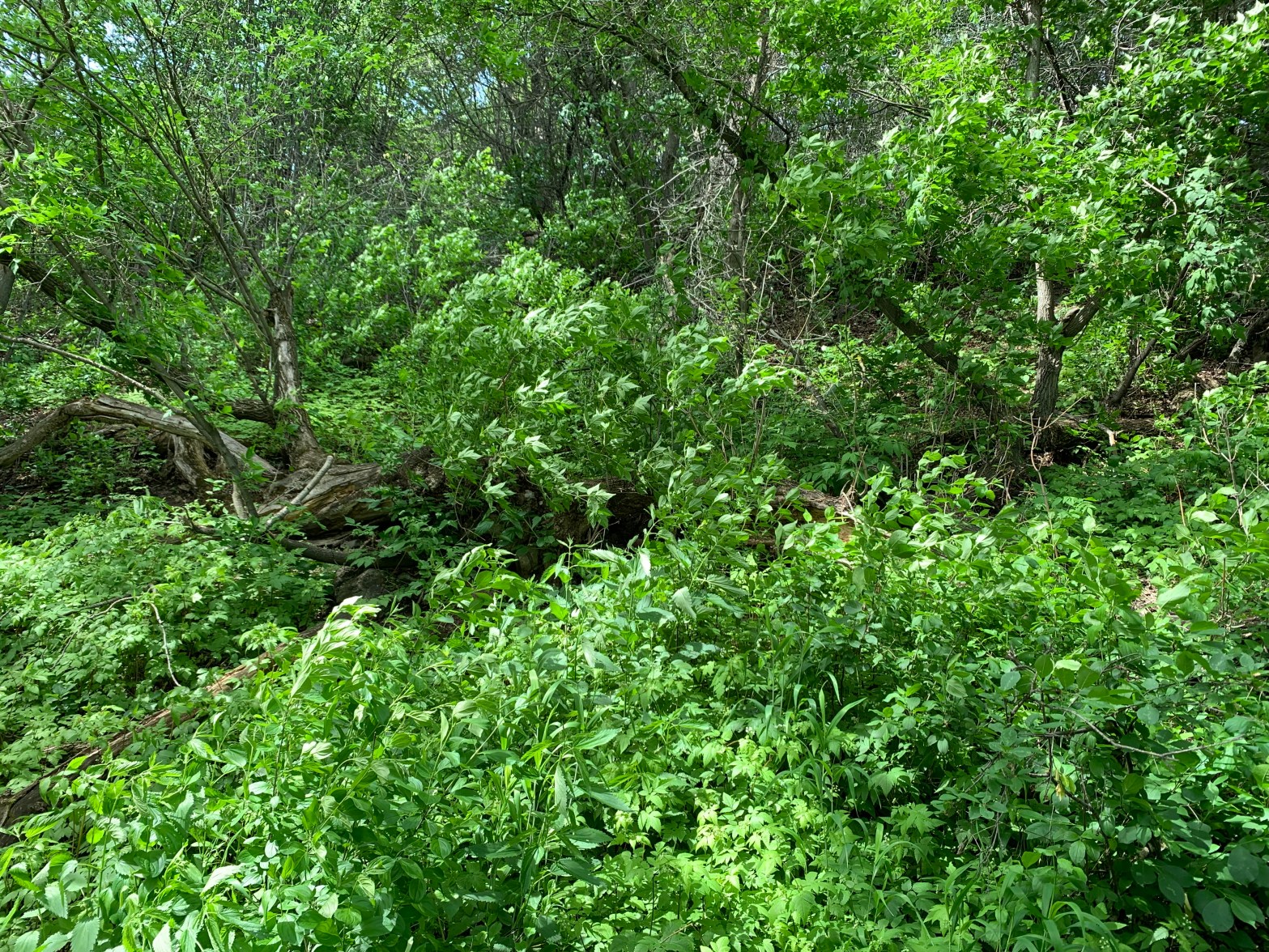
The gully specifically is populated by many plants sacred to the First Peoples from my area; sage and birch are but two used for both medicines and ceremonies.
For a white, European-descended, city-dweller like me, this is unfamiliar territory.
For a white, European-descended, city-dweller like me, this is unfamiliar territory.
Long ago I reached the insight that if I was left alone to survive in the wild, I probably wouldn’t last a night.
Perhaps I could if I had all the supports of contemporary camping–a small gas stove, a waterproof tent, matches, a good knife or hatchet, and food I had bought at my local grocery store.
All these would allow me to bring the city with me. My own comforts from synthetic civilization would permit me to engage the land while remaining within my own frame of reference.
But the land, the vast, complicated, intricate land that I can touch, taste, see, smell, and hear, does not–even remotely–share my frame of reference.
But the land, the vast, complicated, intricate land that I can touch, feel, see, smell, and hear, does not–even remotely–share my frame of reference.
If I were truly to attempt to be shaped by the land, I would have to learn its ways of speaking. I would need to hear the stories it might tell and reconfigure my own language and habits accordingly.
What plants might nourish and which might kill?
What signs might foretell the coming of a storm? What would best shelter me from lightning, hail, and rain?
How to clothe myself to stay warm in the winter and reasonably cool in the summer?
How to feed my family? What food could I find to keep hunger from us throughout the entire year, not only during specific times and seasons?
These questions reflect the fragility of a land-dependent life.
Yet this is a fragility I rarely reflect upon.
So, as I encountered the land and its stories today, I realized just how insulated I, and many of us are.
As I encountered the land and its stories today, I realized just how insulated I, and many of us are.
For those who live in cities, we scarcely encounter the land and all its manifold stories.
Rather, the stories we tell are framed by concrete, steel, rules and regulations, and all the other trappings of contemporary city life.
For example, city-dweller pastimes, like swimming, are often housed in local recreation centres.
No longer must we swim to catch our evening meal.
Therefore, if an edible creature does appear in a local swimming pool, the facility shuts down, the health authorities are called, and an investigation is launched to discover how such a “foreign” being made its way into a site reserved for humans.
A similar example happened recently when a roaming moose made its way into an empty suburban classroom without first seeking permission.
Yes, this suburb in my city is closer to the “wilds” of the surrounding prairie.
But none of this diminished the obligatory chuckling when all the local news outlets told the story of the moose attending school.
Yes, the chuckling probably reflected how funny we find it when we discover a misplaced moose in our highly urban environments.
But, I also wonder how much of our chuckling is informed by an awareness that a wandering moose is not to be toyed with–“wild” creatures are wild, after all . . .
“Wild” creatures are wild, after all . . .
So, yes, the land and its creatures have become foreign to us. And, perhaps this is why we abuse them so.
As we see them in their perceived foreignness, I wonder whether we also see the land and its creatures as potential threats to our purelyhuman existence.
As humans we love our stories. Our civilizations were, of course, built upon our founding myths.
But what stories might the land tell, if only we had the ears to hear them?
How might these stories shape us, if only we learned to take them seriously?
Then, what stories might we tell the land, once we had learned to hear its stories concerning us?
How might we, and the land, be changed by this new, story-sharing relationship?
How might . . .?
Disclaimer: The advice and suggestions offered on this site are not substitutes for consultation with qualified mental or spiritual health professionals. The perspectives offered here are those of the author, not of those professionals with whom readers might have relationships as clients or patients. In crisis situations, readers are encouraged to contact these professionals for appropriate support and treatment if needed.
Earlier in life, I took pride in being very political. I didn’t join a specific political party. But, I was openly critical of those who didn’t share my views. And, often this would get ugly.
For some reason, obnoxiousness came naturally to me. If I got it into my head that there was one right way of doing things, I could be very aggressive in pushing my agenda.
It took a lot of hard lessons and damaged relationships for me to view things differently.
Thankfully I had some good mentors, and some very patient friends.
And, looking back on those times, I can see how my aggression and obnoxiousness were actually driven by fear, anxiety, and my perceived need for self-protection.
Behind all this was also a deeply held belief that others could not be trusted.
And here we get to the nub of the issue . . .
When trust is eroded to the point that conversations quickly turn into shouting matches, how can we talk meaningfully about things that matter?
When trust is eroded to the point that conversations quickly turn into shouting matches, how can we talk meaningfully about things that matter?
In this post, I don’t want to give a step-by-step how-to guide on how to rebuild civility. The pessimistic side of me sometimes thinks the world is past the point of no return; civility may, in fact, be a thing of the past.
Be that as it may, I do want to talk about trust.
Why?
Because spirituality, at its core, is concerned with trust.
So, when we can’t trust our neighbours to treat us with respect, kindness, and dignity, this is fundamentally a spiritual problem.
When we can’t trust our leaders to lead with integrity, to embody the virtues of truthfulness, honesty, and justice, this too is fundamentally a spiritual problem.
When we can’t trust the media, scientists, researchers, physicians, and other kinds of experts to further the interests of all humanity, this too is a fundamentally spiritual problem.
Why are these fundamentally spiritual problems?
It’s because when trust is broken, with anyone or anything, this signals a rupture in relationship.
And why does this create problems?
When relationships are ruptured, we feel no obligation to express love, care, or concern. Rather, we feel freer to label, stereotype, and demonize, regardless of whether those we impose these labels, stereotypes, and demonizations upon conform to these characterizations or not.
When relationships are ruptured, we are no longer concerned with discerning the truth of another person or situation.
In such situations, we are no longer concerned with discerning the truth of another person or situation.
Rather, we become concerned only with shoring up our battlements, circling our wagons, and fortifying our rhetorical fortresses . . . for the sake of . . . what?
Convincing ourselves we’re right?
Expressing our anger and frustration with the state of the world?
Absolving ourselves of whatever damage we might do by posting a vicious attack on social media?
Or . . .?
None of these intentions is connected with healthy spirituality or religion.
Why is this?
Well, I could easily go down the well-worn path of saying that each is driven by the ego and its concerns. I would then also be required to say (almost contractually) that a truly spiritual person is suspicious of the ego. Such people are suspicious of the ego because they want to transcend its concerns to the point of abandoning them almost completely.
But this would do the much-maligned ego a disservice.
Spiritual health is, in fact, dependent on a person having a relatively healthy ego.
This is because a healthy ego enables a person to distinguish between what’s their’s to deal with and what’s others’ to deal with.
In other words, a healthy ego enables a person to establish and maintain healthy interpersonal boundaries. These are, of course, the foundation of healthy interpersonal relationships.
However, anyone can get into trouble when they start to believe that their ego is the sum total of their identity.
When this happens, such a person cannot accept constructive feedback, or any revelations of their potential shortcomings, or any information that does not already conform to the stories they tell themself about themself or about the people in their in-group.
And this is a spiritual problem.
Anyone can get into trouble when they start to believe that their ego is the sum total of their identity.
Why?
A person occupying such a closed stance refuses to believe that there are any true realities beyond their own perspective. They refuse to accept that any person, perspective, or opinion beyond their own can be either correct or true.
In other words, those occupying such closed stances refuse to consider that people and groups beyond themselves might possess truths that require just as much, if not more consideration than the truths they understand themself to possess.
In the emerging international political climate, such a broader sense of truth seems to have become an unnecessary luxury.
Instead, most of us choose only to hear “truths” from those we trust, refusing to realize that truth in any ultimate sense must transcend the perspectives of any specific person or group of people.
No wonder there’s so much conflict in the world today!
Most of us choose only to hear “truths from those we trust, refusing to realize that truth in any ultimate sense must transcend the perspectives of any specific person or group of people.
But here’s where spirituality can offer a solution.
This solution emerges because spirituality is a-political while at the same time being deeply political.
What do I mean by this?
A spiritual person refuses to get caught up in partisan politics. This is so because partisan affiliations limit the perspectives that can be engaged when attempting to act for the good of all–humanity included!
Rather, for spiritual people, the good is discerned through the concreteness of real-life encounters with other people, cultures, groups, nature, and the Ultimate itself.
In other words, the good is discerned in the context of relationship.
And, because spiritual people are deeply aware that they themselves are finite, they are also aware that their own perspectives will always exclude numerous other perspectives, precisely because of their finitude.
So, spiritual people realize that no relationship, nor any network of relationships, can fully capture the sum total of reality.
Truth, then, always lies beyond its specific concrete formulations.
No relationship, nor any network of relationships, can fully capture the sum total of reality.
Anything that expresses a claim to truth, then, becomes an invitation to relationship.
So, when trust is broken and relationships are ruptured, truth cannot be meaningfully established.
Instead, truth becomes a victim of polarization and conflict, and all reality suffers as a result.
Why?
Because we don’t have the secure relational basis to determine the truth about reality in any fundamental or collective sense.
Our capacity to cause damage and harm therefore increases exponentially. This is because our engagements with reality are not grounded in truth. Rather, they are grounded in our own finite perceptions, perceptions that are oriented toward serving our own needs, or the needs of our specific group.
This is why spirituality has the capacity to guide us out of this predicament.
Spirituality has the capacity to guide us out of this predicament.
In its orientation toward relationships, and, in its awareness of human finitude, spirituality advocates for a slow and patient approach when engaging reality.
A spiritual politics thus attempts to get behind the slogans, rhetoric, and polarization, and works to see the faces of the people who hold various opposing positions.
Furthermore, a spiritual politics evaluates policies, parties, and positions on their capacity to build and maintain relationships with everything that is. It is for this reason that no single party, policy, nor position will likely capture the imaginations of those who engage in spiritual politics: none of these things can engage reality in its fullest and truest sense.
Rather, those engaged in spiritual politics will always gesture toward what lies beyond our current policies, positions, and parties.
Why?
Because there is always more to consider; there is always something that will have been missed.
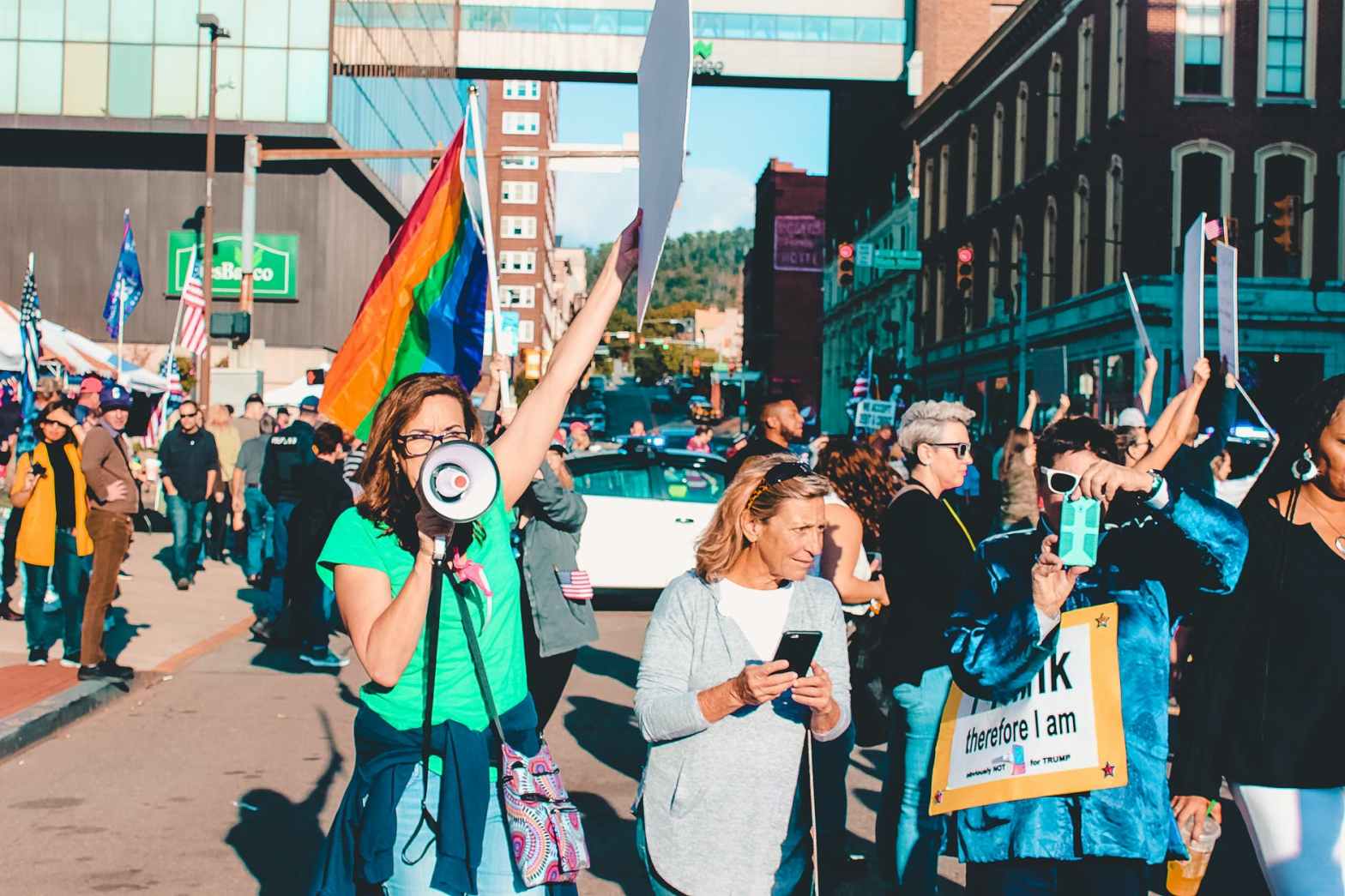
When civility lies behind us and we too easily get stirred up by inflammatory and polarizing rhetoric, we desperately need a politics grounded in relationship, that strives to engage the faces behind the slogans and protests.
In this current situation, no one is innocent and no one is beyond responsibility.
In our current situation, no one is innocent, and no one is beyond responsibility.
Who, then, will have the courage to truly see people as people, all of whom want the best for themselves, for their families, and for the generations who will come after us?
Who, then, will have the courage to be beholden to truth, the truth that is truly true, the truth that transcends and includes all, the truth that beckons everyone and everything into healthy and fulfilling relationships with all that truly is?
A challenging call, to be sure. But it’s becoming more and more urgent.
Why?
Our very future depends upon it.
Disclaimer: The advice and suggestions offered on this site are not substitutes for consultation with qualified mental or spiritual health professionals. The perspectives offered here are those of the author, not of those professionals with whom readers might have relationships as clients or patients. In crisis situations, readers are encouraged to contact these professionals for appropriate support and treatment if needed.





 Reflective Life