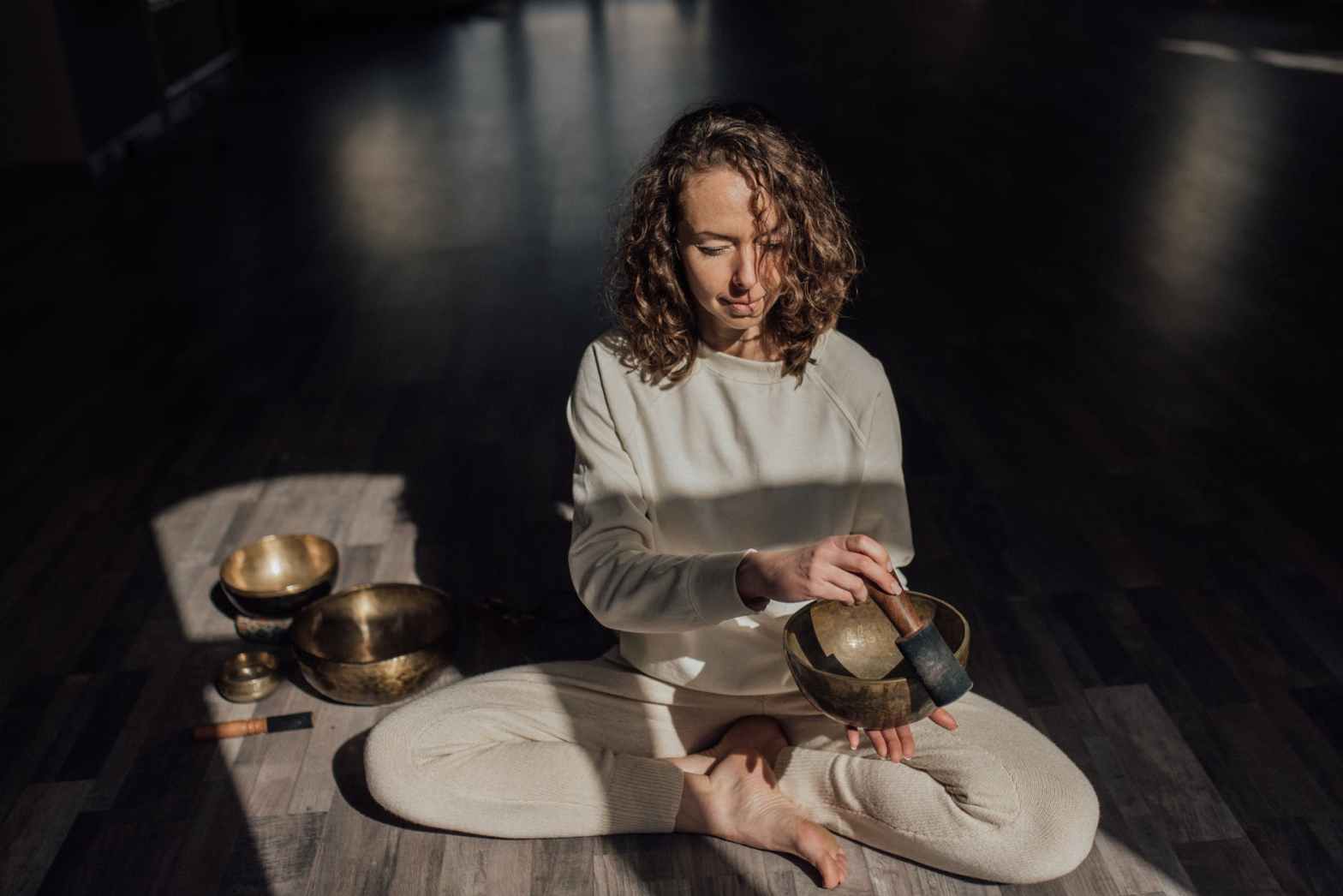
When I started exploring meditation about twenty years ago, I thought it would be a “cool” thing to do. I considered myself “spiritual,” and meditation was one of the things “spiritual” people did. So, I got some books from the library, did some reading, and tried to settle into stillness. Little did I know how much I misunderstood.
At that point I hadn’t had many significant life experiences. I had definitely had tough times in my teen years–like many I had been bullied at school. But, for the most part, I considered myself OK. Meditation was a way for me to build the image I wanted for myself: sophisticated, insightful, in tune, spiritual.
It wasn’t until a few years later when I had some really tough times that I realized there was stuff inside me I needed to take care of. I therefore began therapy, something I have done on and off in the decades since that time. I also began to understand that meditation is not something someone does. Rather, it is something someone lives.
Yet through all this, I also realized meditation has to be accompanied by good teaching. And, what I didn’t understand earlier was this: the teaching and its embodiment is central to the practice. Somehow I got it into my head that if I could meditate for 30 minutes a day, I would automatically become spiritual. Dumb. Really dumb.
Instead, as I now understand, spiritual practice has a much deeper purpose. Here’s how I see it at this point:
1. Take care of your “stuff”
Most of the spiritual teachers I’ve read (and I’ve read several) say that when you meditate, sooner or later you’re going to confront your “stuff”. Here “stuff” is not just the things you desire for yourself but have been unable to achieve. Instead, “stuff” is all the thoughts and memories you would rather have forgotten–everything you’ve experienced, both the positive and the negative.
Now, you might be thinking “Whoa, I really don’t want to go there! There are many reasons I would have liked to forget all that!”
To think that? I have some good news . . . you’re normal!
To engage those thoughts–well, that’s a bit more challenging.
When “stuff” comes up, as it always does in a spiritual practice, you are now given opportunities to deal with it.
This is why the teachings around spiritual practices are so important. No matter who you are, no matter your background or privilege, we’ve all got stuff. And, any spiritual practice worth its name is going to give you tools for dealing with it.
So, how does this work?
Whether you’re into meditation, prayer, yoga, or something else, spiritual practices are designed to bring to consciousness all the things we’ve buried–our joys, our hurts, our traumas, our griefs, our triumphs. And, part of what we discover when all this comes is we are not our stuff.
I’ll repeat that for emphasis: We–not me, not you, not anybody–we are not our “stuff”.
What the spiritual practice teaches us, then, is how to find a deeper and truer identity for ourselves, one that is not bound by anything not rooted in who we really are.
Does this mean that all of life is an illusion, like some popularly think?
No. But it does mean we all have our illusions about life. So part of what spiritual practices teach is how to distinguish between truth and illusion. And, perhaps not surprisingly, it turns out this work is a lifelong process.
Congratulations! You’ve just seen your career path into truth!
2. Discover you are never, ever alone
If you travel beyond the stage where your stuff keeps coming to you, all of a sudden you begin to realize we’ve all got stuff.
From the perspective of spirituality, this is great news!
(Okay, you may be at the stage of wanting to web surf to another page now. But don’t, there’s some good stuff coming–pun intended).
The reason why this is such great news is because this means you are never alone.
Yes, trauma or abuse or dysfunction might tell you you’re alone and you’ll never be lovable. But, guaranteed, there’s someone else out there that’s probably experienced something very similar to you.
And, if there’s someone out there that’s experienced something very similar to you, no doubt there’s someone out there that’s been able to flourish after experiencing pain and suffering.
This is an incredibly hopeful message!
And, if it’s possible to take care of your stuff, to no longer be defined by your pain and suffering, then who knows what you might accomplish?
Now, don’t get me wrong: I’m not arguing that a spiritual practice will eliminate all suffering. In fact, a spiritual practice might actually cause more suffering. This is because it will teach you how to hold all your experiences together at the same time–the good, the bad, the unpleasant, the triumphant.
In doing so, your spiritual practice will reveal, sometimes painfully, all the contradictions and paradoxes in your life.
But when you realize you are not your stuff, you also realize you are not your contradictions and paradoxes. This means you can begin to hold all these parts of yourself gently and compassionately.
You’ll furthermore realize that everyone else experiences exactly the same thing.
So, you’ll begin to ask how you can help others find some of the same compassion you’ve found within yourself.
3. Increase your responsibility
If we’ve all got stuff, and if that means we’re never alone, that must also mean we’re joined to everyone else in ways we can never imagine.
So, when I see myself as caught in my pain and suffering, I also see how I push my pain and suffering on to other people.
Unfortunately, this is true. When your spiritual practice deepens, you get to see all of yourself–even those parts of yourself you’d rather not acknowledge.
Yes, this is but a deeper engagement with your stuff.
Yet this also goes beyond just the stuff that’s happened to you in the past.
Rather, this is the stuff that you do that causes others pain.
In some cases you might do this stuff because you’ve been hurt in the past, and you haven’t completely dealt with it.
Or, it might be that your personality makes you irritable with others, especially when you’re tired, hungry, or stressed.
And, lucky you, your spiritual practice is making you especially aware of all this. And, even more so, your spiritual practice is also making you extremely aware of how your actions and attitudes are affecting others.
What a crazy uncomfortable place to be!
Again, there’s some good news: Even though you may feel trapped in your past, in your frailty, or in your personality, there is always part of you that is much bigger than all these things.
If only there was a way to consistently live out of that larger part of yourself. Wouldn’t that be incredible?
If only you could do that, you could spare yourself and others pain!
4. Explore your role in collective transformation
So, you’re not your stuff, you’re not alone, and you’re feeling invited to take greater responsibility for yourself. Now where do you go?
You’ve probably heard the saying: practise makes perfect?
Well there’s some truth to that, especially in the spiritual realm. But there’s actually something much more basic.
When you become serious about your spirituality, you become more aware that you practise with purpose.
What do I mean by that?
Really, the reason we practise is so we can take care of our stuff. It’s so we can move beneath the stuff that keeps us in places of shame or anger or guilt. It’s so we can break the habits that cause us to harm ourselves or others. It’s to experience compassion, forgiveness, and love, among other positive spiritual traits.
So, when we discover that deeper part of ourselves where we are not bound by our stuff–that’s the place we want to make our home!
The door into that home is discovered in our practice; our ongoing practise is the key that will unlock it.
If you want to be free, if you want to treat yourself and others more fairly and compassionately: the answer? Practise, practise practise.
Many have said transformation of the world begins with transformation of the self. A spiritual practice is one way to take such work seriously.
Some final thoughts
It’s hard to ignore all the conflicts and protests and feelings of crisis so evident in the world right now.
I’m not going to claim that spirituality or taking up meditation, prayer, or yoga is going to solve all the world’s problems.
But I will say any of these practices will change how you view the world. And, what we need right now is a changed view of the world.
What got us to this point simply isn’t working anymore.
Is it true that if you change your mind you can change the world?
Trying a spiritual practice might be one way to find out.
Disclaimer: The advice and suggestions offered on this site are not substitutes for consultation with qualified mental or spiritual health professionals. The perspectives offered here are those of the author, not of those professionals with whom readers might have relationships as clients or patients. In crisis situations, readers are encouraged to contact these professionals for appropriate support and treatment if needed.
 Reflective Life
Fantastic summary Simon – thank you – I will use this in sharing with other people why bother with “spiritual practices”.
LikeLiked by 1 person