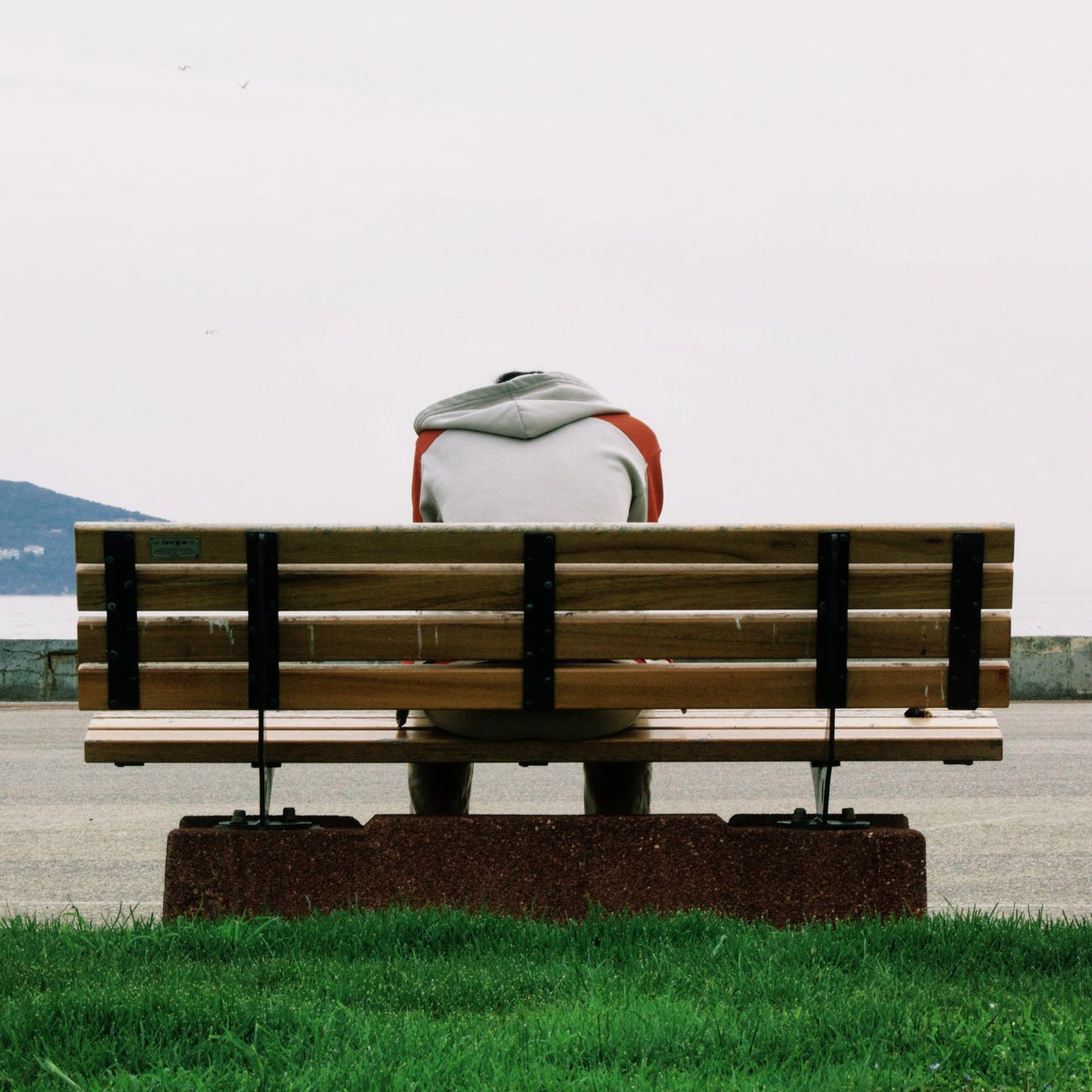
This time of year is always somewhat tender for me. September is a month when I have experienced multiple losses in the past–several deaths, the loss of jobs, difficult life circumstances–all these seem to have occurred during various Septembers in my life.
Sure, I’ve had very difficult experiences during other parts of the year. But September seems to be a month of particular intensity, and I’m not sure why.
In a previous post I wrote about how life can take on a certain rhythm. Sometimes it can seem like smooth sailing, with few difficulties to be navigated. Other times life can seem so intense that you can question why you have to live through all you’re experiencing.
Sometimes life is smooth sailing. Other times it’s so intense you can question why you have to live thorugh all you’re experiencing.
In the midst of such intensity, you can try and counterbalance the stress and pain by framing things positively, saying things like “what doesn’t kill you makes you stronger!” or “there are people who have things far worse than I do.” But somehow these clichés seem only to paint a smiling clown’s face on situations that really cause weeping underneath.
The truth is that whenever you experience loss, you are not only losing the thing or person that is now gone. You are actually losing part of yourself. This is why loss hurts so much. When we invest time, energy, and other resources into things or people that matter to us, when these things or people are gone, all we’ve put into them, our time, our energy, our love, seems to vanish into nothingness.
Such experiences can be heartrending. We can question whether it was worth all the time and effort, we can rage against whatever it was that took this person or thing from us, we can dissolve into sobbing at a moment’s notice, but none of this, none of this, brings back what we’ve lost.
Yet, paradoxically, the strange alchemy of grief requires we let go–let go of the thing we’ve lost, let go of the person we thought we were because of this thing. Once we let go, only then can life and joy return to us.
In the strange alchemy of grief, it is only in letting go that life and joy can return to us.
In my own several experiences of grief, I have found this letting go to be so very difficult. All of me has wanted to hold on to what I once had–my loved ones, my jobs, my sense of security, my sense of self. Yet, by slowly and surely releasing my grasp on things I only thought were mine, I learned what I thought was mine was never really mine in the first place.
When reflecting hard on life, it becomes painfully clear what little is actually mine. My children are not mine. My spouse is not mine. My house is not mine. My belongings are not mine. My life is not mine. Any or all of these could be taken from me at a moment’s notice. And, if I am honest with myself, there is very little I can do to prevent it.
Does this mean I should not fight to preserve these things, if there is something I can do to prevent these losses? Absolutely not! There are times when it is appropriate to fight to protect the things we love.
But then there is the question of what is motivating my need to fight. Is it my need to dominate, prove my power, to assert my control over what I perceive to be mine? Or is it that I want to ensure the health, wellbeing, freedom, and joy of the people, places, and organizations I care about?
Discerning my responses to these questions can be challening. But arriving at a true answer can be empowering, especially in times of grief.
When you love well, meaning you love in the purest and truest sense, without coercion, manipulation, or control, it becomes evident that love is, in some fundamental ways, about letting go.
When you love in the purest and truest sense it becomes evident that love is, in some fundamental ways, about letting go.
Yes, love is about connection, it is about beautiful and meaningful realtionships. But it is also about sharing the freedom to be your own person; it is about nurturing what is good, beautiful, and inspiring in the people you love; it is about inviting others to be the best versions of themselves, while also doing the work you need to do to bring out the best in yourself. It is about giving others the freedom to do what they need to be themselves, while also trusting that your mutual love will always draw you together again.
Love can be frustrating, enraging, and painful. But it can also be inspiring, joyful, and powerful in the midst of the frustration, rage, and pain.
This is how you know love is love–it holds all the ups and downs of a relationship while also constantly affirming your committment to the good of the other. It is, in some ways, about letting go of yourself so you can work for the good of the other.
When love is mutual, all those in loving relationships do this for one another. And this is what makes love love: you are all in it together, you are all doing your work with and for one another.
Love holds all the ups and downs of a relationship while constantly affirming your commitment to the good of the other.
If this is what love is about, then it is no wonder losing a person or thing you love can cause so much pain. Your connection with that person or thing, your sense of being able to meaningfully express your love, is severed, or at least transformed beyond easy recognition.
But, strangely, love is all about transformation. It is about seeing the people and things you love transform themselves into more beautiful versions of who they are. It is about allowing yourself to be transformed by love, becoming a more beautiful version of yourself because of your love, no matter how painful this might be.
So, when grief comes, as it does for all of us, it invites us to see our bereavement as a kind of transformation. Certainly the person or thing we have lost has been tranformed. They are no longer with us in the same way they were before.
Yet, perhaps most painfully, we are also no longer with ourselves in the way we were before. This is likely the true depth of grief’s pain–we don’t know who we are any more because of losing our beloved person or relationship.
But if we have loved, and if we have loved truly, our love for the lost person or thing invites into yet another transformation. It invites us into a deeper love, into a greater vulnerability, precisely because our hearts have been broken wide open by our loss.
Grief invites us into a deeper love, into a greater vulnerability, precisely because our hearts have been broken wide open by our loss.
A number of years ago, after suffering a deep and searing loss, I made a conscious decision to become a more loving person because of it. I had lost many things before that–relationships, jobs, communities–and typically I dealt with those losses badly. I became angry, bitter, and resentful.
Yet, by opening myself to the depth of that most recent loss, the strange alchemy of grief filled me with compassion, joy, and love, precisely because I chose to open myself to the depth of pain I then experienced.
I don’t understand precisely how that worked. But, somehow, by allowing myself to feel how hurt I actually was, I began to understand, viscerally, the pain of others, especially how painful pain can be when we try to avoid or suppress it.
_________________________
There can be a strange purity to grief when we simply allow ourselves to embrace it. This does not mean clinging to our grief, trying to make it part of who we are. Rather, like all good embracings, it means welcoming grief when it comes, holding it for whatever time it needs, and then letting it go. Yes, this is a strange kind of welcome, because grief is a most unusual guest. But she is a guest regardless, and she is one who requires our welcome.
But if love is true, and grief is an invitation to deeper love, grief can be a midwife also, who, with our cooperation, can birth within us a richer care for our world, precisely because we have loved and we have lost and we have learned to love all over again.
Here, then, the ancient wisdom “Love is stronger than death” can be seen as true. Ultimately, it is though death, either literal or figurative, that we learn of love’s strength. For what other reason do we grieve so deeply when we see ourselves as having lost someone or something we love?
In this time when so many are experiencing multiple losses, then, I wish you a depth of love and the grace to embrace whatever grief comes your way.
May love hold you in the midst of pain. May you experience that love that is stronger than death, that can bring forth beauty from your pain, that is labouring to birth something new within you. May this newness know the pain of loss. But may it also know that loss is always most keenly felt because of the depth of your love.
For Further Reading
Miriam Greenspan. (2003). Healing through the dark emotions. Boulder, CO: Shambhala Press.
Disclaimer: The advice and suggestions offered on this site are not substitutes for consultation with qualified mental or spiritual health professionals. The perspectives offered here are those of the author, not of those professionals with whom readers might have relationships as clients or patients. In crisis situations, readers are encouraged to contact these professionals for appropriate support and treatment if needed.
 Reflective Life
Very cool Simon. Have shared on FB! Sande
Sande Ramage +64 27 4788184 spiritedcrone.co.nz
LikeLike
Thanks so much, Sande!
LikeLike
Love is about letting go and creating space for the other. That’s beautiful. Thank you <3.
LikeLike
Thanks so much, spiritualfantasia!
LikeLiked by 1 person
Excellent. Beautifully written Simon. Accepted and Embraced – living it out is the challenge.
LikeLike