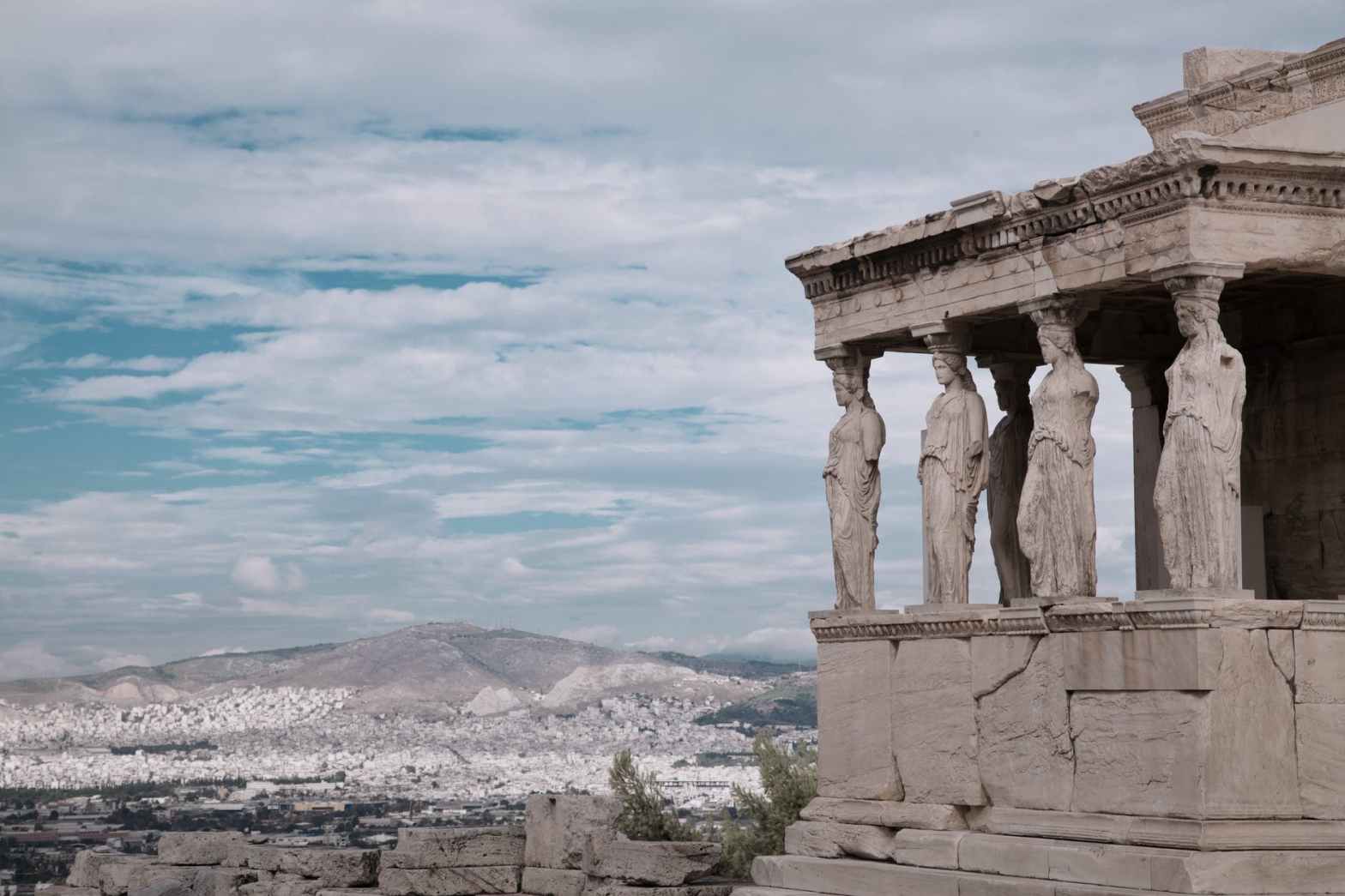
In ancient Greece the city of Delphi was the location of the Oracle of Apollo. There people could enter the god Apollo’s temple and be offered insight regarding business, love, travel, fortune, or any other matter in life. Yet the god was fickle, and the oracle not to be trusted. Perhaps it is not surprising that inscribed on the temple was the simple phrase: “Know yourself.”
Now, over 2000 years later, this phrase, “know yourself”, is a cornerstone of western religion and spirituality. Somehow the ancient Greeks knew that for a person to know themself was to touch the divine.
I’ve been writing a lot about our inner life and outer life. I’ve also been writing a lot about how we can change reality. I’ve been arguing reality is often shaped by our perceptions. So, to change reality, we’ve got to work from the inside out.
One of the initial steps along the way is to follow the advice carved on the Delphi Oracle. Knowing yourself in all areas of life is important, but in the spiritual life it’s crucial.
“Knowing yourself in all areas of life is important, but in the spiritual life it’s crucial.”
When I’ve written about changing reality, I’ve talked a lot about our perceptions, memories, thoughts, and feelings. I’ve talked a lot about how our perceptions, memories, thoughts, and feelings can capture and imprison us, forcing us to experience reality in ways we might not otherwise want.
Knowing ourselves means knowing our perceptions, memories, thoughts, and feelings. But it also means knowing we are not our perceptions, memories, thoughts, and feelings. Rather, there is a much larger field of which all of us is a part. And this is the Self the Delphi Oracle charges us to know.
Various traditions refer to this larger field using a variety of names. But between the traditions the pattern is the same: there is an Infinite field that contains all of reality. And, each individual being is a finite expression of the Infinite. The role of each finite being is to come into contact with that Infinite field so it can fulfill its purpose for being.
“The role of each finite being is to come into contact with the Infinite field so it can fulfill its purpose for being.”
Spirituality is about moving into that Infinite field. It’s also about creating the conditions so that Infinite field can flow through us and fill all of our lived awareness. So, knowing yourself means knowing how best you personally can live into that flow. It also means knowing the things you often do that prevent you from living the flow.
Knowing yourself is about knowing how best you can let go so the flow can flow in you, around you, through you, and beyond you.
Here are eight questions to help you reflect on how you might or might not live in the flow:
- When have you felt carried away by something bigger than yourself?
- What was that experience like?
- What might have contributed to you having that experience?
- Have you ever tried to repeat that experience?
- Did it happen again? If so, what contributed to it this time? If not, why do you think it didn’t?
- What might it be like for you to have this kind of experience permanently?
- Is that something you want? Why or why not?
- What might you do in response to considering these questions? What do you see as next steps either toward or away from this experience?
Knowing yourself as part of the flow opens a new way of living. It means life changes, because you are now fully participating in the flow of reality, moving as other things move, while also beckoning others into that Infinite field that causes all things to flow.
References
Bourgeault, C. (2013). The Holy Trinity and the Law of Three: Discovering the Radical Truth at the Heart of Christianity. Boulder, CO: Shambhala.
Panikkar, R. (2010). The Rhythm of Being: The Unbroken Trinity; The Gifford Lectures. Maryknoll, NY: Orbis.
Rohr, R. and Morrell, M. (2016). The Divine Dance: The Trinity and Your Transformation. New Kensington, PA: Whitaker House.
Disclaimer: The advice and suggestions offered on this site are not substitutes for consultation with qualified mental or spiritual health professionals. The perspectives offered here are those of the author, not of those professionals with whom readers might have relationships as clients or patients. In crisis situations, readers are encouraged to contact these professionals for appropriate support and treatment if needed.
 Reflective Life
Well, lots of thoughts here that beg clarification. E.g., (1) “Knowing yourself in all areas of life is important, but in the spiritual life it’s crucial.” – For me the spiritual life and all other areas of life are integrated; (2) What exactly are you referring to in Panikkar?
LikeLike
Thanks for this, Robert. In response: 1) Yes, I agree, the spiritual life and the rest of life are integrated, but I’m not assuming all my readers understand this or agree. So, the phrasing here can be understood as leading readers step-by-step into a fuller experience of reality. 2) Panikkar’s argument hinges on the notion that everyone is located at a certain time and place so that they view reality from the vantage point of that time and place. So, for them to participate fully in the “rhythm of being” they must be aware of the time and place in which they are located–another dimension of “knowing yourself”. Perhaps an oblique reference, but a fairly central one . . .
LikeLike